Circle USYC – Tokenized U.S. Treasury Yield
Circle USYC – Tokenized U.S. Treasury Yield Overview
Circle USYC (often listed as Hashnote USYC) is a tokenized yield-bearing asset issued by Circle, the company behind USDC. It invests primarily in short-term U.S. Treasury securities and related instruments to provide stable, low-risk yield in an on-chain format. USYC offers daily accruing interest with redemption options through U.S. banking channels, making it a compelling alternative for digital cash management and Treasury exposure.
As part of Circle’s ecosystem, USYC leverages the company’s established regulatory framework and infrastructure to deliver compliant, transparent tokenized yields. This positions it as a key player in the tokenized Treasury space, appealing to institutions seeking predictable returns with blockchain benefits like instant transfers and composability.
Live Market Snapshot [rwa_detail id=”hashnote-usyc”]
How USYC Works
- Investment Strategy: Focuses on high-quality, short-duration U.S. government securities for capital preservation and yield.
- Yield Mechanism: Interest accrues daily (rebasing or distribution model); paid monthly based on NAV.
- Token Mechanics: ERC-20 compatible on Ethereum with multi-chain support; allowlist or compliance layers for eligibility.
- Redemption & Liquidity: Daily redemptions via banking rails; on-chain transfers for secondary market activity.
- Transparency: Regular reporting from Circle, blockchain visibility, and audits for reserve backing.
- Compliance: Structured to meet institutional standards, including KYC/AML where required.
Current Market Position USYC ranks highly in tokenized Treasury products (~$2.4B+ AUM), driven by Circle’s brand trust and demand for yield-bearing stable alternatives amid fluctuating rates.
Comparison to Alternatives
- Vs. BlackRock BUIDL: Similar Treasury focus and institutional appeal; USYC offers Circle’s ecosystem advantages (e.g., USDC integration), while BUIDL emphasizes BlackRock’s scale.
- Vs. Ondo USDY: Both yield-bearing; USYC may provide more direct banking redemptions, Ondo broader DeFi compatibility.
- Vs. Traditional Yield Funds: On-chain efficiency (24/7 access, programmability) with comparable low risk.
- Vs. Other Tokenized Treasuries (Superstate USTB, Franklin BENJI): USYC benefits from issuer maturity and liquidity.
Risks and Considerations
- Interest-rate risk (yield tied to short-term Treasury movements).
- Issuer/platform dependency (Circle operations).
- Regulatory shifts in tokenized securities.
- Minimums and eligibility restrictions for direct access.
- Blockchain-specific risks (though mitigated by audits).
Use Cases
- Institutional on-chain cash management.
- Yield generation in DeFi protocols.
- Hedging or diversification in crypto portfolios.
- Bridge for TradFi to blockchain yields.
Historical Context Circle expanded into tokenized Treasuries in 2024–2025, building on USDC success. Growth accelerated in 2026 with institutional demand for compliant RWAs.
Future Outlook Tokenized Treasuries like USYC are poised for further expansion in 2026, potentially with increased AUM, multi-chain depth, and hybrid products. Stable rates and regulatory clarity will drive adoption.
Resources & Attribution
- CoinGecko ID: hashnote-usyc (exact slug from https://www.coingecko.com/en/coins/hashnote-usyc — Circle’s tokenized product often listed under Hashnote USYC)
- Asset Class: U.S. Treasuries / Yield-Bearing Stable Alternatives
- Dream Rating: 9.1/10 – Strong issuer reputation with consistent yield and high liquidity
- Key Insights:
- Issued by Circle (USDC creators), investing in short-term U.S. Treasuries for stable, accruing yield
- Daily liquidity and redemption options through U.S. banking channels
- Designed for institutional and qualified investors with compliance focus
- High AUM reflecting strong adoption in tokenized cash management
- Multi-chain support for broader accessibility and DeFi integration
- APY Estimate (Your Note): ~3.15% 30-day yield (variable with Treasury rates; accrues daily, distributed monthly; subject to market conditions as of early 2026)
- AUM / Scale Notes: ~$2.44B AUM (one of the largest in tokenized Treasuries; rapid institutional inflows)
- Redemption Frequency: Daily via U.S. banking (on-chain transfers also supported)
- Minimum Investment: 100,000 USDC (direct; lower on secondary markets/exchanges)
- Management Fee: Competitive/low (typically 0.15–0.30% annual; aligned with institutional standards)
- Inception / Launch Notes: Launched 2024–2025 via Circle ecosystem; strong growth in tokenized yield category
- Eligibility / Investor Type: Institutional and qualified investors primarily; retail access via secondary markets
- Jurisdiction: Bermuda / United States (Circle-regulated structure)
- Networks / Blockchain: Ethereum + 2 more (multi-chain for efficiency)

Private Credit & Alternative Debt
Midas Partners With Fasanara Capital to Tokenize Alternative Debt Strategy – RWA News

Midas has entered into a partnership with Fasanara Capital to tokenize an alternative debt strategy. The collaboration, reported within the last 11 hours, aims to bring a new form of tokenized private credit to the market.
Details of the Partnership Fasanara Capital, a specialist in alternative credit and distressed debt, will work with Midas to tokenize a specific debt strategy. The tokenized product will represent fractional ownership in a portfolio of alternative debt instruments, allowing investors to gain exposure through blockchain-based tokens.
The partnership combines Fasanara’s expertise in sourcing and managing alternative credit opportunities with Midas’ tokenization infrastructure. The resulting product is expected to offer investors access to yields from real-world debt assets in a more liquid and transparent format.
The RWA market currently exceeds $26 billion (excluding stablecoins), with tokenized treasuries and private credit as the leading categories. Tokenizing alternative debt strategies expands the range of available products beyond traditional treasuries and standard credit, potentially appealing to investors seeking higher yields with managed risk.
What the Tokenized Strategy Involves Alternative debt strategies typically include distressed debt, special situations, and other non-traditional credit opportunities. These assets often offer higher potential returns than conventional bonds or loans but come with increased complexity and risk management requirements.
By tokenizing the strategy, Midas and Fasanara aim to make these opportunities more accessible. Investors will be able to purchase fractional shares of the portfolio, trade them on supported platforms, and potentially use the tokens in DeFi applications for additional yield or collateral purposes.
The tokenized structure is expected to provide greater transparency through on-chain reporting and more efficient settlement compared to traditional private credit vehicles.
Implications for Tokenized Real World Assets This partnership represents continued innovation in the private credit segment of RWAs. As more specialized debt strategies are tokenized, the market gains diversity and depth. Investors can access a broader range of yield opportunities while benefiting from the advantages of tokenization, such as fractional ownership and improved liquidity.
The development also highlights growing collaboration between traditional credit specialists and tokenization platforms. Such partnerships help bridge the gap between real-world credit markets and on-chain finance, potentially attracting more institutional capital to the RWA sector.
Practical Considerations for Participants The tokenized alternative debt strategy is in early stages, but interested users can prepare as follows:
- Monitor announcements from Midas and Fasanara Capital for launch details and eligibility requirements.
- Review the underlying strategy — understand the types of debt included and the risk profile.
- Assess token mechanics — confirm how yields are distributed and whether the tokens can be used in DeFi.
- Consider portfolio fit — evaluate how tokenized alternative credit complements existing holdings in treasuries or standard credit.
- Stay informed — track rwa.xyz for updates on new tokenized debt products and overall category growth.
These steps help users make informed decisions as the product becomes available.
Risks and Limitations Alternative debt strategies carry higher risk than traditional credit due to the nature of distressed or special situation investments. Tokenization does not eliminate underlying credit risk. Smart contract and platform risks exist. Regulatory requirements for tokenized securities may apply. Investors should conduct thorough due diligence and only allocate capital they can afford to risk.
Outlook The partnership between Midas and Fasanara Capital to tokenize an alternative debt strategy is another step in the maturation of the private credit segment within RWAs. As more specialized strategies become available in tokenized form, the sector continues to expand its offerings and attract a wider range of participants.
RWA News Network will continue covering developments in tokenized credit, institutional partnerships, and their impact on the broader RWA market.
Subscribe to RWA News Network for ongoing updates on tokenized debt strategies, market data, and new RWA products.
Institutional Tokenization & ETF Innovation
Franklin Templeton Partners with Ondo Finance to Launch Tokenized ETFs for 24/7 Crypto Wallet Trading – RWA News
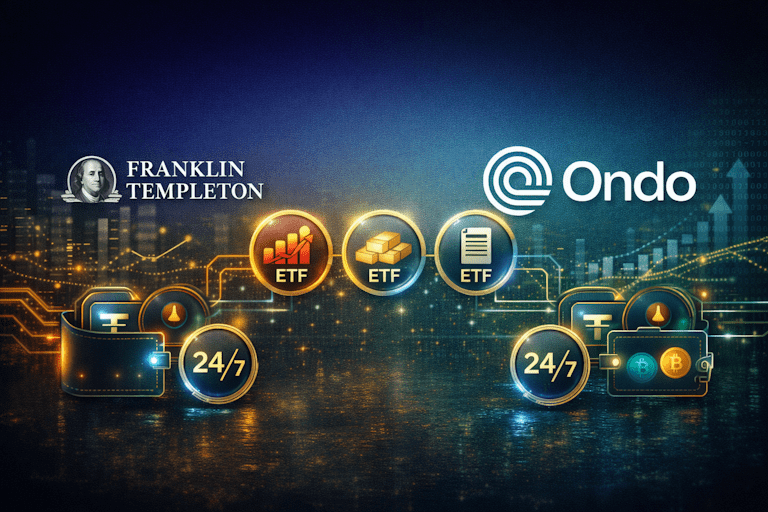
Franklin Templeton has partnered with Ondo Finance to launch tokenized versions of five of its ETFs that can be traded 24/7 directly through crypto wallets. The initiative, announced in the last few hours, bypasses traditional brokerage accounts and limited market hours, marking a significant step in bringing institutional-grade investment products on-chain.
Details of the Tokenized ETF Launch The partnership involves tokenizing five Franklin Templeton ETFs: a growth-oriented U.S. equity strategy (FFOG), a systematic large-cap equity fund (FLQL), a gold fund (FGDL), a high-yield corporate bond fund (FLHY), and an income-focused U.S. equity strategy (INCE).
Under the arrangement, Ondo Finance purchases shares of the Franklin ETFs and issues tokenized versions through a special-purpose vehicle. Investors receive tokens that pass through the financial exposure and returns of the underlying ETFs, rather than direct ownership of the shares. The tokens can be held in crypto wallets, traded 24/7, and used as collateral or in DeFi applications.
Trading is supported by Ondo’s market makers, ensuring liquidity even outside traditional stock and bond market hours. The products will initially be available in Europe, Asia-Pacific, the Middle East, and Latin America, with U.S. availability depending on further regulatory clarity for on-chain distribution of registered funds.
Franklin Templeton manages approximately $1.7 trillion in assets, while Ondo Finance currently has roughly $2.7 billion in tokenized assets outstanding.
Why This Partnership Is Significant Franklin Templeton is one of the world’s largest and most respected asset managers. Its decision to tokenize ETFs and make them available in crypto wallets represents a major endorsement of tokenization by traditional finance. The partnership combines Franklin Templeton’s product expertise with Ondo Finance’s tokenization infrastructure, creating a bridge between conventional investment products and blockchain technology.
The 24/7 trading capability is a key innovation. Traditional ETFs are limited to stock exchange hours, creating overnight and weekend gaps. Tokenized versions in crypto wallets allow continuous trading, instant settlement, and global access without the need for brokerage accounts or cross-border infrastructure.
Implications for Tokenized Real World Assets This launch expands the range of tokenized products available to investors. Tokenized ETFs provide exposure to U.S. equities, gold, and fixed income in a form that is fractional, liquid, and composable in DeFi. The ability to use tokens as collateral or in yield strategies adds capital efficiency that traditional ETFs cannot match.
For the broader RWA ecosystem, the partnership demonstrates that major asset managers are actively moving into tokenization. This increases credibility, attracts more institutional capital, and accelerates the growth of tokenized assets beyond treasuries and credit into equities and commodities.
Retail participants benefit from easier access to high-quality investment products through familiar crypto wallets. Institutional investors gain new tools for portfolio construction and liquidity management.
Practical Considerations for Participants The tokenized ETFs are in early rollout, but interested users can prepare as follows:
- Wallet readiness — Ensure a compatible crypto wallet (MetaMask, Phantom, or similar) is set up on supported chains.
- Monitor availability — Track updates from Franklin Templeton and Ondo Finance for launch dates in your region.
- Understand token mechanics — Tokens represent rights to returns rather than direct ownership of ETF shares.
- Assess use cases — Consider how tokenized ETFs can be used for collateral, DeFi strategies, or portfolio diversification.
- Stay informed — Follow rwa.xyz for TVL changes and new tokenized product listings.
These steps help users evaluate and engage with the new products responsibly.
Risks and Limitations Tokenized ETFs carry market, liquidity, and smart contract risks. Regulatory clarity in the U.S. is still evolving, which may delay or limit availability. The special-purpose vehicle structure means investors own rights to returns rather than the underlying shares, which has legal and tax implications. Always review offering documents and use audited platforms.
Outlook Franklin Templeton’s partnership with Ondo Finance to launch tokenized ETFs for 24/7 crypto wallet trading is a landmark development for the RWA sector. It demonstrates that leading traditional asset managers are actively embracing tokenization, which could accelerate the transition from billions to trillions in market size.
RWA News Network will continue covering major institutional tokenization initiatives, product launches, and their impact on the tokenized real world assets market.
Subscribe to RWA News Network for ongoing updates on tokenized ETFs, institutional developments, and new RWA products.
Institutional Adoption & Tokenized Securities
NYSE Partners with Securitize to Build 24/7 Tokenized Securities Platform – RWA News March 2026
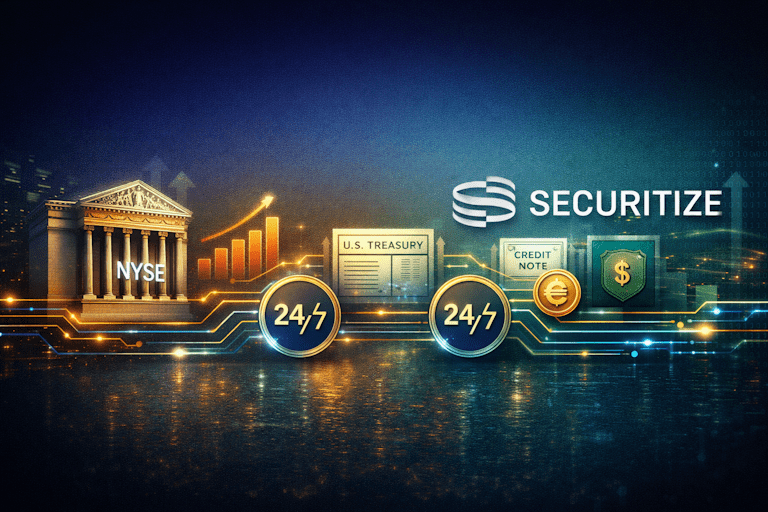
The New York Stock Exchange (NYSE) has partnered with Securitize to develop a 24/7 tokenized securities platform. The announcement, reported in the last few hours, marks a major step in bringing traditional stock exchange infrastructure to on-chain tokenized assets.
Details of the Partnership NYSE, one of the world’s largest and most recognized stock exchanges, is collaborating with Securitize, a leading tokenization platform that already works with BlackRock on the BUIDL tokenized treasury fund. The joint project aims to create a regulated platform that allows 24/7 trading of tokenized securities, including equities, debt instruments, and other real world assets.
The platform will combine NYSE’s market infrastructure and regulatory experience with Securitize’s tokenization technology. This would enable instant settlement, fractional ownership, and continuous trading — features that are currently not available in traditional markets, which close on weekends and after-hours.
The RWA market currently exceeds $26 billion (excluding stablecoins), with tokenized treasuries and credit as the leading categories. NYSE’s entry into tokenized securities is expected to significantly accelerate institutional and retail adoption by providing a trusted, regulated venue for trading tokenized assets.
Why This Development Is Significant The NYSE is one of the most recognized symbols of traditional finance. Its partnership with Securitize sends a strong signal that major stock exchanges are actively preparing for the tokenized asset era. This is not a small pilot — it is an effort to build a full-scale, 24/7 platform for tokenized securities.
Key benefits of the proposed platform include:
- 24/7 trading and settlement, eliminating weekend and after-hours gaps.
- Fractional ownership, making high-value assets accessible to smaller investors.
- Reduced intermediary costs and faster settlement compared to traditional markets.
- Regulatory compliance and investor protections built into the infrastructure.
These features address long-standing pain points in traditional finance and could bring trillions in currently illiquid or restricted assets onto blockchain rails.
Implications for Tokenized Real World Assets The partnership would expand the RWA market by providing a regulated, high-trust venue for tokenized securities. Retail investors could gain easier access to tokenized treasuries, credit, equity, and other assets through familiar brokerage channels. Institutional clients would benefit from integrated trading of traditional and tokenized assets on the same platform.
The development could also drive deeper liquidity across the RWA ecosystem. A major exchange operating a tokenized securities platform would attract more capital, reduce spreads, and improve price discovery for tokenized products. This would benefit existing RWA categories and encourage the tokenization of additional asset classes.
Practical Considerations for Participants The announcement has several implications for RWA users:
- Increased access — A NYSE-backed tokenized securities platform could make it easier for retail investors to buy and trade tokenized assets through regulated channels.
- Better liquidity — Continuous trading and institutional participation would deepen markets and reduce volatility.
- Regulatory credibility — NYSE involvement adds significant legitimacy to tokenized assets.
- Monitoring — Track updates from NYSE, Securitize, and rwa.xyz for launch timelines and available tokenized products.
- Portfolio planning — Consider how tokenized equity and securities could fit into diversified RWA allocations alongside treasuries and credit.
These steps help users stay informed as the platform develops.
Risks and Limitations The project is still in development, so timelines and final features are not yet confirmed. Regulatory approval is required, and changes could occur. Tokenized securities still carry market, liquidity, and smart contract risks. Investors should approach new platforms cautiously and diversify holdings.
Outlook The NYSE’s partnership with Securitize to build a 24/7 tokenized securities platform is a landmark development for the RWA sector. It demonstrates that traditional stock exchanges are actively moving into tokenization, which could accelerate the transition from billions to trillions in market size.
RWA News Network will continue covering major institutional partnerships, tokenized securities developments, and their impact on the broader RWA market.
Subscribe to RWA News Network for ongoing updates on institutional developments, market data, and new RWA products.

Midas Partners With Fasanara Capital to Tokenize Alternative Debt Strategy – RWA News

Franklin Templeton Partners with Ondo Finance to Launch Tokenized ETFs for 24/7 Crypto Wallet Trading – RWA News

NYSE Partners with Securitize to Build 24/7 Tokenized Securities Platform – RWA News March 2026

Ripple Taps Singapore Central Bank Sandbox for RLUSD Stablecoin Trade Finance Test

BNY Mellon CEO Says Big Banks Will Bridge Crypto and Traditional Finance – RWA News

BlackRock CEO Larry Fink and Coinbase CEO Brian Armstrong Both Bullish on Tokenization

Tokenized US Treasuries Reach $11B–$12B Record – Yields & Top Funds

RWA Projections 2026–2030: From $26 Billion Today to Multi-Trillion Scale

Fidelity Calls on SEC to Expand Broker-Dealer Crypto Capabilities via Alternative Trading Systems – RWA News

Robinhood CEO Vlad Tenev Urges CLARITY Act for Stablecoin Yields – RWA Boost in March 2026
BlackRock CEO Larry Fink and Coinbase CEO Brian Armstrong Both Bullish on Tokenization

Tokenized Real World Assets Surge Past $27 Billion in March 2026 – The Quiet Revolution Reshaping Global Finance
-
 Real World Assets5 days ago
Tokenized US Treasuries Reach $11B–$12B Record – Yields & Top Funds
-
Market Projections & Outlook4 days ago
RWA Projections 2026–2030: From $26 Billion Today to Multi-Trillion Scale
-
Real World Assets4 days ago
Fidelity Calls on SEC to Expand Broker-Dealer Crypto Capabilities via Alternative Trading Systems – RWA News
-
Real World Assets5 days ago
Robinhood CEO Vlad Tenev Urges CLARITY Act for Stablecoin Yields – RWA Boost in March 2026
-
Institutional Bullishness & Tokenization Outlook3 days ago
BlackRock CEO Larry Fink and Coinbase CEO Brian Armstrong Both Bullish on Tokenization
-
Market Data & Insights3 days ago
Tokenized Real World Assets Surge Past $27 Billion in March 2026 – The Quiet Revolution Reshaping Global Finance
-
AI & DeFi Yield Integration4 days ago
OpenLedger Adopts ERC-4626 for AI-Managed DeFi Yield – RWA News
-
Real World Assets5 days ago
Ripple Burns 9M RLUSD – What This Means for Tokenized Stablecoin Liquidity in RWA News 2026