Corporate Treasury & Tokenized Payments
Mitsubishi Corporation Adopts JPMorgan’s Kinexys Blockchain for Global Payments – A Major Step for Tokenized Corporate Treasury in 2026
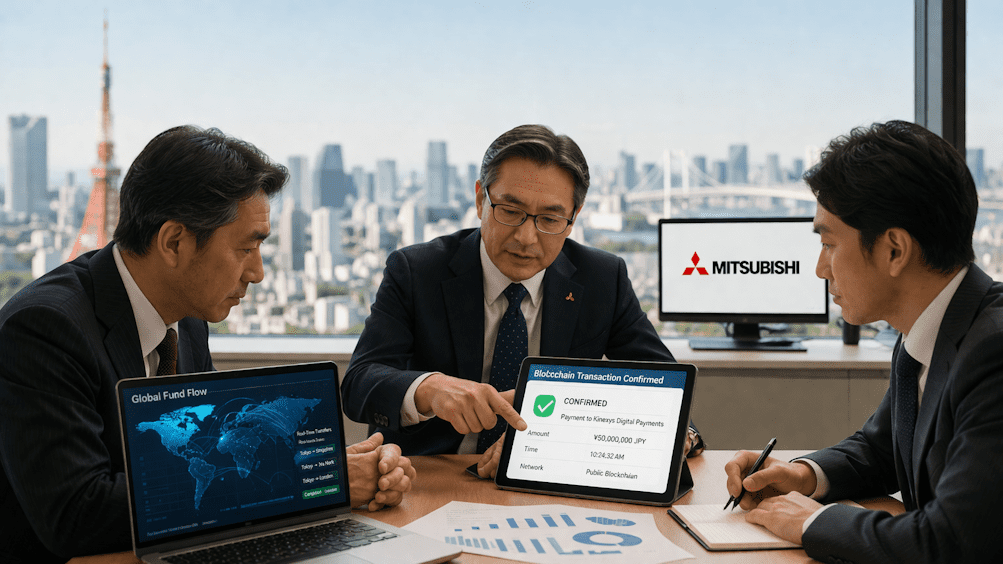
When one of the world’s largest trading companies decides to move its global money flows onto a blockchain platform, it’s worth paying attention. On March 30, 2026, Mitsubishi Corporation quietly made exactly that move. The Japanese conglomerate, known for everything from energy trading to heavy industry and consumer goods, is adopting JPMorgan Chase’s Kinexys Digital Payments system for faster, round-the-clock fund transfers across its international operations.
This isn’t a small pilot or a press-release experiment. Mitsubishi plans to begin full utilization as early as fiscal 2026, making it the first Japanese company to integrate the Kinexys network at this scale. For anyone following the real-world asset (RWA) space, the news carries extra weight. While tokenized treasuries and credit have dominated headlines, corporate treasury operations represent the next frontier where blockchain infrastructure can deliver immediate, practical value.
Kinexys, formerly known as Onyx and built around JPMorgan’s long-running JPM Coin project, has evolved into a full-featured blockchain-based payment rail. It allows near-instant, 24/7 multicurrency transfers between accounts, reduces reliance on traditional correspondent banking networks, and operates with the security and compliance standards that large corporations demand. Mitsubishi’s decision to use it signals that even the most traditional global businesses are ready to move beyond pilots and test real operational change.
The timing makes sense. Multinationals like Mitsubishi manage complex cash flows across dozens of countries, currencies, and time zones. Traditional wire transfers can take days, involve multiple intermediaries, and incur high fees. Kinexys promises settlement in minutes, 24 hours a day, with far greater transparency and lower costs. For a company that moves billions in goods and services worldwide every year, those efficiencies add up quickly.
JPMorgan has been steadily expanding Kinexys beyond its own balance sheet. The platform already handles billions in daily transaction volume for institutional clients, and the bank has publicly stated ambitions to scale it further. Mitsubishi’s adoption is the latest in a string of high-profile corporate integrations, following similar moves by companies like BMW, Siemens, and FedEx. What sets this one apart is Mitsubishi’s status as the first major Japanese corporation to commit at this level, potentially opening the door for more Asian multinationals to follow.
From an RWA perspective, this development is more than just a payments story. Tokenized payment rails like Kinexys are the plumbing that makes the entire real-world asset ecosystem work more smoothly. When corporate treasuries can move money instantly on-chain, it reduces friction for settling tokenized treasuries, credit products, and other RWAs. It also creates new opportunities for programmable money — automated payments tied to smart contracts, real-time reconciliation, and better liquidity management across tokenized assets.
JPMorgan itself has been clear about this direction. The bank has expanded Kinexys to support tokenized deposits, cross-chain settlement experiments with partners like Ondo Finance and Chainlink, and even Delivery-versus-Payment (DvP) transactions for tokenized securities. Mitsubishi’s move fits into that larger vision: building infrastructure that connects traditional corporate finance with on-chain rails.
For the RWA market, which now sits comfortably above $26 billion excluding stablecoins, these kinds of corporate adoptions are important signals. Much of the current focus remains on yield-bearing products like tokenized U.S. Treasuries and private credit. But the real growth catalyst may come from the back-office side — treasury operations, cross-border payments, and supply-chain finance — where blockchain can deliver measurable efficiency gains without requiring a complete overhaul of existing business models.
Mitsubishi’s global footprint makes the announcement particularly interesting. As a sogo shosha (general trading company), it operates in energy, metals, machinery, chemicals, and food across more than 90 countries. Coordinating cash flows in that environment is complex. Using Kinexys could streamline everything from supplier payments to subsidiary funding, potentially reducing settlement times from days to minutes and cutting costs along the way.
Of course, this isn’t happening in isolation. JPMorgan has been expanding Kinexys internationally, including in the Asia-Pacific region, and has expressed interest in deeper penetration among Japanese financial institutions and businesses. The bank’s broader digital assets strategy includes tokenized deposits, programmable payments, and integration with public blockchains like Base. Mitsubishi’s adoption could serve as a proof point that encourages other Japanese firms to explore similar solutions.
Regulatory and compliance considerations are also key here. Kinexys operates with the full backing of a regulated U.S. bank, which gives corporations the comfort level they need to move real operational money onto blockchain infrastructure. For companies like Mitsubishi, maintaining strict compliance while gaining speed and transparency is the ideal combination.
Looking ahead, this kind of infrastructure adoption could accelerate the broader tokenization trend. As more corporations integrate blockchain-based payment rails, the case for tokenizing other parts of their balance sheets — from invoices to supply-chain finance to even certain real assets — becomes stronger. It’s a step toward what some call the “internet of money,” where value moves as seamlessly as information does today.
For retail and institutional investors in the RWA space, the implications are indirect but meaningful. More efficient corporate treasury operations can lead to better liquidity in tokenized products, more reliable settlement for RWA trades, and ultimately greater institutional participation. When companies like Mitsubishi demonstrate that blockchain payments work at scale in real-world operations, it helps normalize the technology for everyone else.
Challenges remain, of course. Scaling blockchain payments to handle the full complexity of global corporate finance isn’t trivial. Interoperability between different platforms, regulatory harmonization across borders, and the need for robust security and governance will all play a role in how quickly this evolves. But the direction is clear: major corporations are moving from experimentation to implementation.
Mitsubishi’s adoption of Kinexys is a concrete example of that shift. It’s not flashy headline-grabbing tokenization of a trophy asset — it’s the kind of practical, back-office innovation that often drives lasting change in finance. As more companies follow suit, the tokenized payment rails that support the entire RWA ecosystem will become stronger, faster, and more widely used.
RWA News Network will continue tracking these developments in corporate treasury, tokenized payments, and their impact on the broader real-world asset market.
Subscribe for ongoing coverage of institutional RWA adoption, payment infrastructure innovations, and market updates.








Integra Layer: Dedicated Layer 1 Blockchain Built for Real Estate Tokenization with $12B+ Consortium – RWA News April 2026

Lise and Kaiko Partner to Deliver Institutional-Grade Market Data for Tokenized Securities – RWA News April 2026

Tokenized RWA Market Reaches $23.6 Billion with 66% Growth in 2026

Mitsubishi Corporation Adopts JPMorgan’s Kinexys Blockchain for Global Payments – A Major Step for Tokenized Corporate Treasury in 2026

Tokenized Real Estate Is Quietly Gaining Ground in 2026 as Institutions Line Up

Ripple Keeps Tightening RLUSD Supply with Fresh Burns – What It Means for Stablecoin Stability in 2026

RWA Projections 2026–2030: From $26 Billion Today to Multi-Trillion Scale

Tokenized US Treasuries Reach $11B–$12B Record – Yields & Top Funds

Tokenized Real World Assets Surge Past $27 Billion in March 2026 – The Quiet Revolution Reshaping Global Finance

JPMorgan Now Accepting Bitcoin and Ethereum as Institutional Collateral – RWA News March 2026

Robinhood CEO Vlad Tenev Urges CLARITY Act for Stablecoin Yields – RWA Boost in March 2026

BlackRock CEO Larry Fink and Coinbase CEO Brian Armstrong Both Bullish on Tokenization
-
 Market Projections & Outlook7 months ago
RWA Projections 2026–2030: From $26 Billion Today to Multi-Trillion Scale
-
Real World Assets7 months ago
Tokenized US Treasuries Reach $11B–$12B Record – Yields & Top Funds
-
Market Data & Insights7 months ago
Tokenized Real World Assets Surge Past $27 Billion in March 2026 – The Quiet Revolution Reshaping Global Finance
-
Institutional & Collateral Updates7 months ago
JPMorgan Now Accepting Bitcoin and Ethereum as Institutional Collateral – RWA News March 2026
-
Real World Assets7 months ago
Robinhood CEO Vlad Tenev Urges CLARITY Act for Stablecoin Yields – RWA Boost in March 2026
-
Institutional Bullishness & Tokenization Outlook7 months ago
BlackRock CEO Larry Fink and Coinbase CEO Brian Armstrong Both Bullish on Tokenization
-
Real World Assets7 months ago
Fidelity Calls on SEC to Expand Broker-Dealer Crypto Capabilities via Alternative Trading Systems – RWA News
-
Institutional Adoption & Tokenized Securities7 months ago
NYSE Partners with Securitize to Build 24/7 Tokenized Securities Platform – RWA News March 2026