Market Data & Insights
Jito’s JTX Opens Issuer-Quoted Trading for More Than 1,650 Tokenized Stocks on Solana
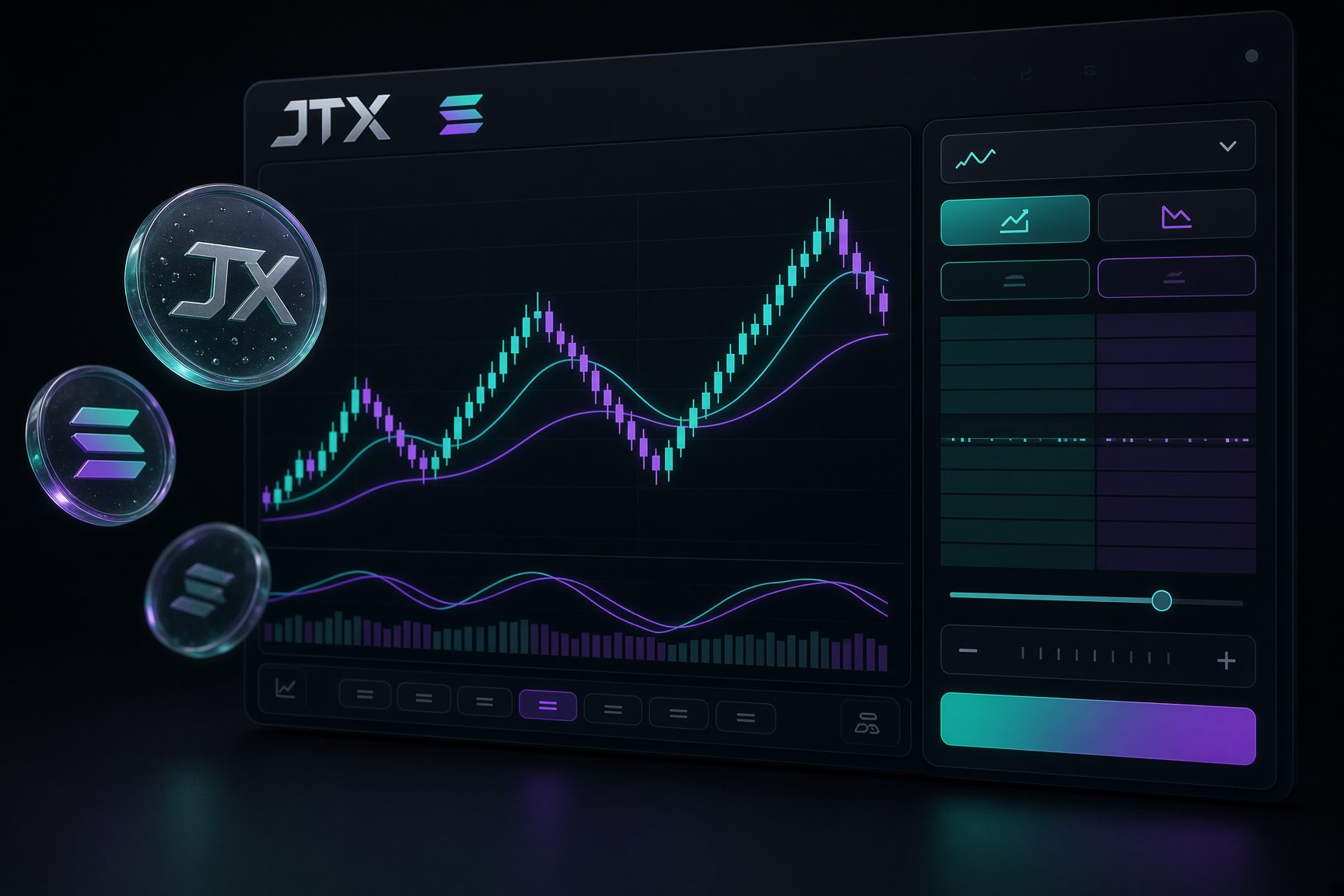
Most tokenized stock trading on Solana still happens against automated market maker pools. Those pools are often thin, which means a larger order can move the price sharply or fail to fill at a usable rate. On November 5, Jito’s JTX terminal introduced a different path when it launched its Equities section. Instead of swapping into a shared pool, traders can now request a quote directly from the issuer for a specific order size.
The new section covers more than 1,650 tokenized U.S. and international stocks issued by Backpack, Ondo, and xStocks. A trader asks for a price on the exact size they want. The issuer replies with an executable quote for that order. The tokens remain in the user’s own wallet. Alongside the quotes, JTX shows the kind of market data equity traders normally expect from a broker screen: earnings calendars, analyst views, options activity, and sector maps. The interface is available on desktop and mobile layouts.
The liquidity problem RFQ is trying to solve
On a typical Solana pool, even popular tokenized stocks can show limited depth. A single mid-sized order can represent a large percentage of the available liquidity, which either pushes the price or results in partial fills and higher effective costs. RFQ works the other way. The price is generated for that specific order rather than taken from a pool that every other trade is also depleting. JTX has said the setup can support orders into the seven figures with less slippage than most pool-based swaps. Ondo has noted that the quotes let traders tap liquidity from the underlying stock market instead of relying only on what is sitting in an on-chain pool at that moment.
This does not change the tokens themselves. Users still hold the same products issued by Backpack, Ondo, or xStocks. What changes is the pricing and execution route available inside JTX. For traders who have been limited by thin pool depth, the issuer-quoted path offers a way to size orders without directly moving the on-chain pool price.
Equities, built for equity traders.
Now live on JTX.
Trade tokenized US and international equities from @Backpack and @Ondo with direct issuer quotes (RFQ), live pricing, and a full equities data experience. https://t.co/Zvhr3YrSeR
— JTX (@jtx_trade) November 5, 2026
How traders actually use it
Users can connect an external Solana wallet such as Phantom or Backpack, or they can use JTX’s embedded self-custodial wallet. Once connected, the Equities view shows live pricing next to the research tools. Trading availability still depends on the user’s location and each issuer’s restrictions. Not every stock is offered in every jurisdiction, and some names have limited sessions outside regular U.S. market hours. JTX does not custody the tokens; they stay in the wallet the user controls.
JTX is built by the Jito team and was already positioned as a professional trading terminal for crypto and meme activity. The Equities launch expands that into a workflow that looks more familiar to stock traders while remaining entirely on Solana. Both Backpack and Ondo confirmed their products were available on the platform shortly after the announcement. The terminal also supports multiple funding paths, including deposits that arrive as USDC on Solana and cross-chain options.
Context on Solana’s tokenized equity market
Solana already hosts a large share of tokenized equity activity across several issuers. Daily volumes have reached hundreds of millions of dollars on busy sessions, and the network has seen strong after-hours and weekend trading in these products. At the same time, many individual stocks still trade against relatively small pools. The RFQ route is aimed at that specific constraint rather than at replacing every existing pool. Whether it captures meaningful volume will depend on how consistently the issuers provide competitive quotes and how many traders prefer the self-custodial RFQ path over the pool routes they already use.
JTX has been adding related tools around the same time, including portfolio PnL tracking and more deposit and withdrawal options. Further issuer integrations or expanded stock coverage would be a natural next step if the initial quotes see steady demand. The feature does not alter the legal structure or rights of the underlying tokens. It simply adds a new way to price and execute trades in those tokens inside one terminal.
For now, the practical test is straightforward: can the issuer quotes support larger orders cleanly enough that traders use them instead of (or alongside) the existing pools? Early usage data will show whether the RFQ path solves the depth issue for the names that currently trade with limited on-chain liquidity.





Market Data & Insights
Tokenized Real World Assets Surge Past $27 Billion in March 2026 – The Quiet Revolution Reshaping Global Finance

The tokenized real-world assets (RWA) market has officially entered a new era. As of mid-March 2026, the on-chain value of tokenized RWAs (excluding stablecoins) has climbed to approximately $26.4–$27.1 billion, according to data from RWA.xyz and cross-verified reports from CoinDesk and PYMNTS. This represents nearly a fourfold increase from roughly $6.6 billion just one year ago — and marks the first time the sector has outpaced several major DeFi categories in total value locked.
For context, this growth isn’t just hype. It’s driven by concrete institutional adoption, regulatory clarity in key jurisdictions, and the undeniable appeal of on-chain yield in a still-volatile crypto market. Tokenized U.S. Treasuries alone now account for roughly $11–$12 billion, making them the undisputed leader. Private credit, commodities (especially tokenized gold), corporate bonds, and non-U.S. government debt have each crossed the $1 billion mark, creating six distinct categories with meaningful scale.
This milestone isn’t just a number — it signals that real-world finance is steadily moving onto blockchains in ways that were theoretical only two years ago.
The Numbers Behind the Boom
The latest RWA.xyz dashboard (updated as of March 23, 2026) paints a clear picture:
- Tokenized U.S. Treasuries: ~$11–$12 billion (dominant category, up significantly year-over-year).
- Private Credit: ~$2.8 billion and growing fast.
- Commodities: ~$5.7 billion (led by tokenized gold products like PAXG and XAUT).
- Corporate Bonds & Institutional Funds: Each surpassing $1 billion.
Six categories have now individually exceeded $1 billion in on-chain value — a clear sign of diversification and maturing infrastructure.
Circle’s USYC (Hashnote USYC) has quietly overtaken BlackRock’s flagship BUIDL fund, reaching approximately $2.2–$2.4 billion in assets. BlackRock’s BUIDL sits at around $2 billion. This shift highlights how retail-accessible and DeFi-friendly products are gaining ground even against traditional giants. Ondo Finance’s USDY and OUSG products have also crossed combined milestones near $1 billion, further proving the demand for yield-bearing stable alternatives.
Electric Capital’s recent report (March 17, 2026) adds another layer: out of 501 tracked real-world yield sources, only 34 currently exceed $50 million in on-chain assets. This concentration shows the market is still early — the winners are pulling far ahead while most projects remain in pilot or small-scale phases.
Why This Explosion Is Happening Now
Three major forces are colliding in early 2026:
- Yield Hunger in a High-Rate World Short-term U.S. Treasury yields remain attractive (hovering around 3.4–4.5% after fees). Tokenized versions like BUIDL, USYC, USDY, and BENJI let investors earn these rates directly on-chain without leaving their wallets. Daily accrual, 24/7 liquidity, and DeFi composability make them far more attractive than traditional money market funds for crypto-native users.
- Institutional Infrastructure Is Finally Ready BlackRock, Franklin Templeton, Janus Henderson, and Ondo have all launched or expanded tokenized products with proper legal wrappers, attestations, and compliance. This has opened the floodgates for pension funds, family offices, and corporations that previously stayed away from crypto.
- Regulatory Tailwinds and Market Maturity Clearer rules in the U.S., EU, and Abu Dhabi (where Ondo recently won approvals) have reduced uncertainty. Meanwhile, stablecoin integration and cross-chain bridges are making RWAs truly usable rather than experimental.
The result? Tokenized Treasuries alone have grown faster than many expected, and private credit is emerging as the next breakout category with higher yield potential (often 8–15% in well-structured pools).
What This Means for Investors and the Broader Market
For everyday crypto users and institutions alike, the implications are profound:
- Better Risk-Adjusted Returns: On-chain Treasuries and credit pools now offer real yields (3–5% for Treasuries, 6–12%+ for credit) with lower volatility than pure crypto plays.
- Fractional Ownership & Liquidity: Assets that were once locked behind high minimums or illiquid contracts can now be traded 24/7 in tiny fractions.
- DeFi Composability: Tokenized RWAs are increasingly used as collateral on Aave, Morpho, Pendle, and other platforms, creating new yield strategies.
- Portfolio Diversification: Investors can now blend Bitcoin/ETH exposure with stable on-chain Treasuries or private credit without leaving the blockchain.
The broader tokenized market (including off-chain backing) is already approaching $350–$400 billion in some estimates, showing the pipeline is massive.
However, challenges remain. Only a small number of projects have reached meaningful scale. Liquidity in secondary markets for many RWAs is still developing. Regulatory clarity is improving but not universal. And smart contract or issuer risks can’t be ignored — even with audits and attestations.
The Road Ahead for 2026 and Beyond
Most analysts expect tokenized RWAs to continue their rapid expansion through the rest of 2026 and into 2027. Predictions include:
- Tokenized Treasuries potentially doubling again toward $20–$25 billion.
- Private credit becoming the next $5–$10 billion category as more originators tokenize loans and invoices.
- Commodities (gold, real estate, carbon credits) seeing broader adoption.
- Major traditional banks and asset managers launching their own on-chain products at scale.
The convergence of TradFi and DeFi is no longer a thesis — it’s happening in real time. As infrastructure improves (better bridges, compliance tools, and user experience), RWAs could become the default way institutions and sophisticated individuals manage cash and fixed-income allocations.
For rwanews.network readers and the broader crypto community, this is the moment to pay close attention. The projects and protocols getting it right today — whether through superior yield, better compliance, or stronger DeFi integration — will likely dominate the next phase of the market.
The quiet revolution is getting louder.
Market Data & Insights
Electric Capital Maps 501 Real-World Yield Sources – 93% Still Offline in March 2026

Electric Capital just dropped a mapping of 501 real-world yield sources — treasuries, private loans, real estate rents, supply-chain financing, commodity returns, invoice factoring, you name it — and the number that stands out is 93%. That’s how much is still completely offline from DeFi and tokenized ecosystems in March 2026.
What the Report Actually Shows They went through hundreds of sources of real income in the traditional world — everything from government debt yields to business credit payments and rental income from property. Only about 7% of those have been tokenized so far. The RWA market is already over $25B (excluding stablecoins), with treasuries and credit leading the way, but this report makes it crystal clear how much is still sitting in old-school systems, waiting to move on-chain.
I think it’s one of those eye-opening moments. The tech is here, the wallets are easy, but the majority of real yields — trillions in potential — are still trapped behind legacy infrastructure.
Why So Much Is Still Offline Nah, it’s not because blockchain can’t handle it. The bottlenecks are legacy systems, regulation, and just plain habit. Banks and funds have been running these yield-generating activities for decades the old way — paper contracts, intermediaries, minimums, and slow settlements. Bringing it on-chain means dealing with smart contracts, audits, compliance checks, and new legal frameworks.
But the tools are improving fast. We’re seeing more bridges every month — protocols like Centrifuge, Ondo, and YieldNest are already pulling in private credit and treasuries. The gap is closing, but 93% offline shows we’re still very early.
What This Means for Us 93% untapped is a big number. When more of those yields move on-chain, liquidity gets deeper, options multiply, and access gets easier for regular people like you and me. You’ll be able to earn from real-economy activity — business loans getting repaid, property rents coming in — without needing millions, connections, or waiting on banks.
That’s the part I’m paying attention to. It’s not about hype; it’s about building real, sustainable income streams on-chain. The market is already growing fast, but this mapping shows the upside is still massive.
How to Position Yourself Right Now You don’t have to wait for everything to tokenize. Here’s what I’d do today, step by step:
- Wallet set up and funded — stablecoins or ETH, nothing complicated. Make sure it’s on a low-fee chain if you’re testing small amounts.
- Play with what’s already live — USYC or BUIDL for treasuries, YieldNest ynRWAx for private credit. These are yielding real income right now.
- Watch the bridges — Centrifuge, Ondo, YieldNest are the ones actively bringing more sources online. Follow their updates.
- Start small — test with a little capital so you understand how yields accrue, what gas feels like, and how transparent the tracking is.
- Track everything — rwa.xyz is still the best dashboard for seeing TVL, new listings, and what categories are heating up. Set alerts if they have them.
This way you’re not sitting on the sidelines — you’re already in when the next wave hits.
A Few Risks to Remember Anything emerging has risks. Smart contracts can have bugs, even if audited. Underlying assets can underperform if borrowers default or markets shift. Regs can change and slow things down or add requirements. Always start small, use established protocols, and don’t put in money you can’t afford to see go sideways.
Bottom Line Electric Capital’s map shows the RWA story is still early — 93% of real yields are out there waiting to come on-chain. This is the kind of upside that builds real wealth over time, not overnight.
Subscribe to RWA News Network so you don’t miss when the next sources go live.
Which untapped yield area interests you most — private credit, real estate, or something else?

ITIA Opens Whitelist for Free 1,111-Piece Genesis Collection on Ethereum as Applications Surpass 25,000

Jito’s JTX Opens Issuer-Quoted Trading for More Than 1,650 Tokenized Stocks on Solana

Formation Securities Files to Run First Tokenized Stock Venue on Solana

Securitize Adds Exxon, Disney and More to Its Solana Stock Tokens

Robinhood Chain’s Stock Tokens Now Sit in Nearly 1.7 Million Wallets

Solana’s Tokenized Assets Hit $5 Billion in October as Banks and Brokers Ship Actual Products

RWA Projections 2026–2030: From $26 Billion Today to Multi-Trillion Scale

Tokenized US Treasuries Reach $11B–$12B Record – Yields & Top Funds

Tokenized Real World Assets Surge Past $27 Billion in March 2026 – The Quiet Revolution Reshaping Global Finance

JPMorgan Now Accepting Bitcoin and Ethereum as Institutional Collateral – RWA News March 2026

Robinhood CEO Vlad Tenev Urges CLARITY Act for Stablecoin Yields – RWA Boost in March 2026

Mitsubishi Corporation Adopts JPMorgan’s Kinexys Blockchain for Global Payments – A Major Step for Tokenized Corporate Treasury in 2026
-
 Market Projections & Outlook8 months ago
RWA Projections 2026–2030: From $26 Billion Today to Multi-Trillion Scale
-
Real World Assets8 months ago
Tokenized US Treasuries Reach $11B–$12B Record – Yields & Top Funds
-
Market Data & Insights8 months ago
Tokenized Real World Assets Surge Past $27 Billion in March 2026 – The Quiet Revolution Reshaping Global Finance
-
Institutional & Collateral Updates8 months ago
JPMorgan Now Accepting Bitcoin and Ethereum as Institutional Collateral – RWA News March 2026
-
Real World Assets8 months ago
Robinhood CEO Vlad Tenev Urges CLARITY Act for Stablecoin Yields – RWA Boost in March 2026
-
Corporate Treasury & Tokenized Payments7 months ago
Mitsubishi Corporation Adopts JPMorgan’s Kinexys Blockchain for Global Payments – A Major Step for Tokenized Corporate Treasury in 2026
-
Institutional Bullishness & Tokenization Outlook8 months ago
BlackRock CEO Larry Fink and Coinbase CEO Brian Armstrong Both Bullish on Tokenization
-
Real World Assets8 months ago
Fidelity Calls on SEC to Expand Broker-Dealer Crypto Capabilities via Alternative Trading Systems – RWA News