Market Growth & Performance
Robinhood Chain’s Stock Tokens Now Sit in Nearly 1.7 Million Wallets
Robinhood Chain currently holds about $266 million in distributed real-world assets across nearly 1.7 million holder addresses, according to RWA.xyz data from early November. Most of that activity is concentrated in its Stock Tokens.
These are standard ERC-20 tokens that give holders exposure to individual U.S. stocks and ETFs. Robinhood Assets (Jersey) Limited issues them as debt securities. Dividends and corporate actions are handled through an on-chain multiplier so the token continues tracking the underlying share without requiring a new contract. Each token has its own Chainlink price feed, and holders can transfer them, trade them outside regular market hours, or post them as collateral in DeFi protocols.
The products are not available to U.S. persons. Eligible customers in more than 120 countries can access them through Robinhood Wallet. The chain itself is an Arbitrum-based Layer 2 that went live in July 2026. Stablecoins on the network (primarily USDG from Paxos and USDe from Ethena) currently sit near $1 billion and serve as the main trading pair for the Stock Tokens.
As of early November, RWA.xyz tracks roughly 200 active Stock Tokens with a combined value around $160 million. Transfer volume over the prior 30 days has been in the double-digit billions, though a meaningful portion of that activity appears to be bot-driven round trips rather than directional retail flow. Still, the holder count continues to climb — up roughly 5–6% over the last 30 days — and the tokens are already being used as collateral in lending markets on the chain.
Unlike the institutional products that have recently landed on Solana, Robinhood’s approach is retail-oriented and tightly integrated with its existing customer base. The chain inherits liquidity and distribution from a platform that already has tens of millions of accounts. What it does not yet have is the same depth of regulated, dividend-bearing equity entitlements that platforms like Securitize are issuing elsewhere.
For now, the numbers show a large number of wallets holding relatively small positions in tokenized stock exposure, with stablecoins doing most of the heavy lifting on volume.







NFTs
ITIA Opens Whitelist for Free 1,111-Piece Genesis Collection on Ethereum as Applications Surpass 25,000
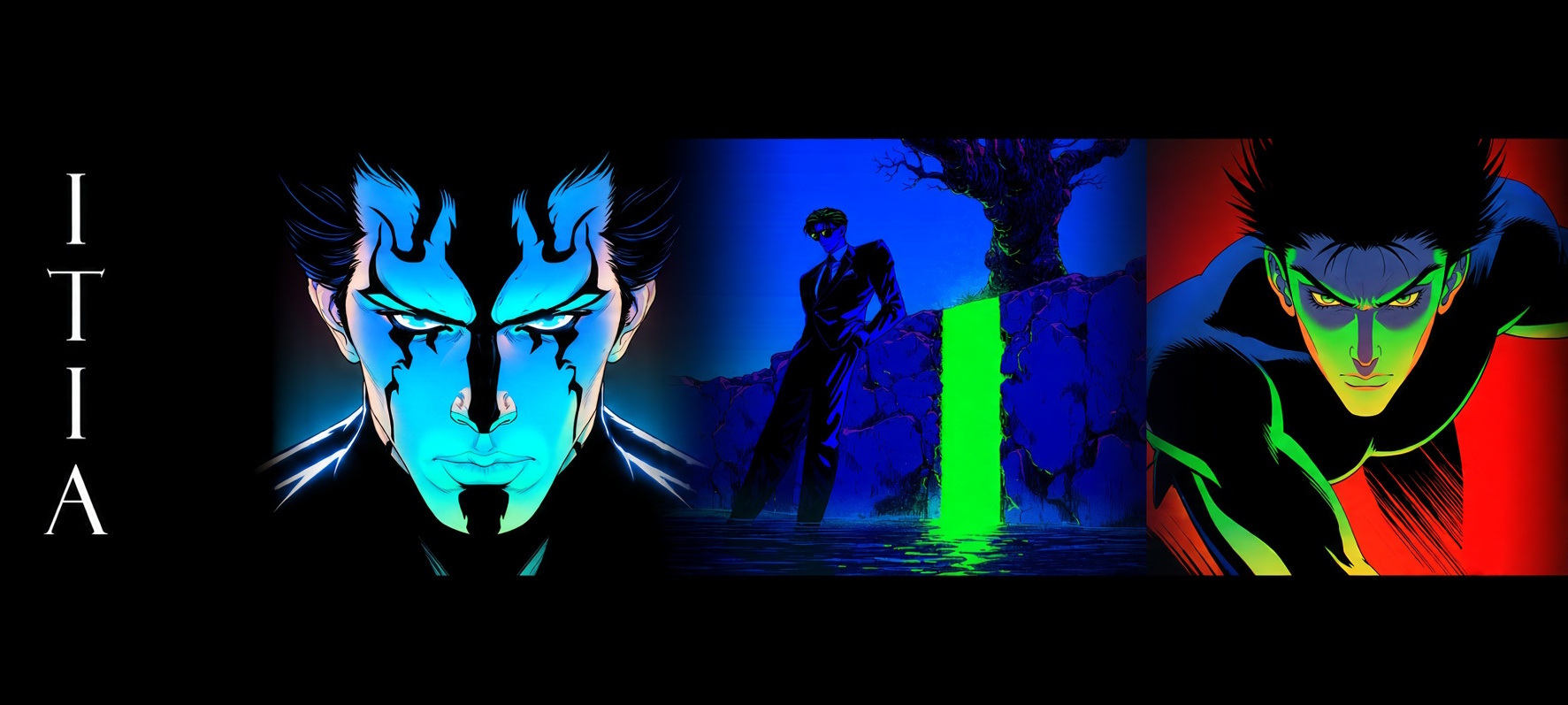
ITIA, short for “I Think It’s Art,” has opened whitelist applications for its upcoming Genesis collection. The drop is set for 1,111 unique pieces, free to mint, on Ethereum through OpenSea. Applications run through the project’s ITIAverse portal and close on November 18, 2026. There is no public mint; access is whitelist-only.
Demand has been strong from the start. Within the first days after the ITIAverse portal opened, applications crossed 5,000 and then 6,000. By early November, community updates reported the total had moved into the tens of thousands, with multiple posts citing more than 18,000, more than 25,000, and one specific figure of 27,382 applicants. The team has said every application is reviewed by hand. Founder Pe publicly acknowledged a post claiming over 25,000 applications. With only 1,111 spots available and the window still open until November 18, the ratio of applicants to available places is high.
The project was co-founded by Pe (@Pe_ITIA) and Iv (@Iv_ITIA), who have described themselves as longtime friends. They registered ITIA as a German GmbH in May 2026. The site and socials repeatedly use the lines “I Think It’s Art. I Think It’s Time. I Think It’s Yours.” and position the work as a place where art feels like home.
Before Genesis, the team put a small founding collection on-chain. ITIA Family consists of 23 unique, custom PFPs minted on Ethereum. Those pieces were created for the founders, ambassadors, and early supporters. The collection is live on OpenSea and is presented as an identity chapter rather than a large commercial drop.
I Think It’s OPEN
Step into the ITIAverse
and share your story with us.Every story matters to us. We read them all.
1111 Pieces · Free Mint · WL only
The ITIAverse is the only way to apply · until Nov 18I Think It’s Art • I Think It’s Yours
https://t.co/xpcRnpQ3TG https://t.co/V0U6xWCB3d— ITIA (@IThinkItsArt) October 28, 2026
Genesis is framed as the next step. Supply is capped at 1,111 pieces with an additional 111 reserved for the treasury. The mint itself is free. Applicants log in with an X account or wallet and submit a short story or connection to the project. Mint timing is still listed as TBA. The project has stated it has no token.
Holders of ITIA NFTs receive a limited license under the project’s Codex. They can use the art as a profile picture, sell the NFT, and create merchandise or content up to $50,000 in gross revenue per calendar year. They cannot modify the core art, use it for AI training, mint new tokens from it, or register trademarks on the artwork. Rights end when the NFT is transferred.
The project is still early. Most public activity so far has been community building, the small Family collection, and the ongoing whitelist process for Genesis. The high number of applications relative to the 1,111 spots shows clear interest, but the manual review process means not every applicant will be selected. Partnership mentions have included game-related collaborations, but no large product launches beyond the NFT collections have been detailed yet.
For readers focused on real-world asset tokenization and institutional on-chain products, ITIA sits in a different category. It is an artist-driven, community-oriented NFT project on Ethereum with a free-mint structure and a stated emphasis on long-term belonging over short-term trading volume. Whether the Genesis drop and subsequent activity stay consistent with that framing will depend on how the team executes after the whitelist closes and the mint occurs.
Official links:
- Website: ithinkitsart.com
- X: @IThinkItsArt
- Whitelist portal: itiaverse.ithinkitsart.com
- Family collection: opensea.io/collection/itiafamily
Market Data & Insights
Jito’s JTX Opens Issuer-Quoted Trading for More Than 1,650 Tokenized Stocks on Solana
Most tokenized stock trading on Solana still happens against automated market maker pools. Those pools are often thin, which means a larger order can move the price sharply or fail to fill at a usable rate. On November 5, Jito’s JTX terminal introduced a different path when it launched its Equities section. Instead of swapping into a shared pool, traders can now request a quote directly from the issuer for a specific order size.
The new section covers more than 1,650 tokenized U.S. and international stocks issued by Backpack, Ondo, and xStocks. A trader asks for a price on the exact size they want. The issuer replies with an executable quote for that order. The tokens remain in the user’s own wallet. Alongside the quotes, JTX shows the kind of market data equity traders normally expect from a broker screen: earnings calendars, analyst views, options activity, and sector maps. The interface is available on desktop and mobile layouts.
The liquidity problem RFQ is trying to solve
On a typical Solana pool, even popular tokenized stocks can show limited depth. A single mid-sized order can represent a large percentage of the available liquidity, which either pushes the price or results in partial fills and higher effective costs. RFQ works the other way. The price is generated for that specific order rather than taken from a pool that every other trade is also depleting. JTX has said the setup can support orders into the seven figures with less slippage than most pool-based swaps. Ondo has noted that the quotes let traders tap liquidity from the underlying stock market instead of relying only on what is sitting in an on-chain pool at that moment.
This does not change the tokens themselves. Users still hold the same products issued by Backpack, Ondo, or xStocks. What changes is the pricing and execution route available inside JTX. For traders who have been limited by thin pool depth, the issuer-quoted path offers a way to size orders without directly moving the on-chain pool price.
Equities, built for equity traders.
Now live on JTX.
Trade tokenized US and international equities from @Backpack and @Ondo with direct issuer quotes (RFQ), live pricing, and a full equities data experience. https://t.co/Zvhr3YrSeR
— JTX (@jtx_trade) November 5, 2026
How traders actually use it
Users can connect an external Solana wallet such as Phantom or Backpack, or they can use JTX’s embedded self-custodial wallet. Once connected, the Equities view shows live pricing next to the research tools. Trading availability still depends on the user’s location and each issuer’s restrictions. Not every stock is offered in every jurisdiction, and some names have limited sessions outside regular U.S. market hours. JTX does not custody the tokens; they stay in the wallet the user controls.
JTX is built by the Jito team and was already positioned as a professional trading terminal for crypto and meme activity. The Equities launch expands that into a workflow that looks more familiar to stock traders while remaining entirely on Solana. Both Backpack and Ondo confirmed their products were available on the platform shortly after the announcement. The terminal also supports multiple funding paths, including deposits that arrive as USDC on Solana and cross-chain options.
Context on Solana’s tokenized equity market
Solana already hosts a large share of tokenized equity activity across several issuers. Daily volumes have reached hundreds of millions of dollars on busy sessions, and the network has seen strong after-hours and weekend trading in these products. At the same time, many individual stocks still trade against relatively small pools. The RFQ route is aimed at that specific constraint rather than at replacing every existing pool. Whether it captures meaningful volume will depend on how consistently the issuers provide competitive quotes and how many traders prefer the self-custodial RFQ path over the pool routes they already use.
JTX has been adding related tools around the same time, including portfolio PnL tracking and more deposit and withdrawal options. Further issuer integrations or expanded stock coverage would be a natural next step if the initial quotes see steady demand. The feature does not alter the legal structure or rights of the underlying tokens. It simply adds a new way to price and execute trades in those tokens inside one terminal.
For now, the practical test is straightforward: can the issuer quotes support larger orders cleanly enough that traders use them instead of (or alongside) the existing pools? Early usage data will show whether the RFQ path solves the depth issue for the names that currently trade with limited on-chain liquidity.
Institutional Adoption & Tokenized Securities
Formation Securities Files to Run First Tokenized Stock Venue on Solana
Formation Securities notified the U.S. Securities and Exchange Commission on November 9 that it intends to operate a tokenized securities venue on Solana. The firm expects trading to begin in early 2027 under the SEC’s Innovation Exemption, with tokenized shares of Galaxy Digital (GLXY), Exodus Movement (EXOD), and Forward Industries (FWDI) planned for the initial lineup.
The venue would use permissioned automated market maker pools built on technology licensed from Orca. Eligible tokenized stocks must provide the same rights as the underlying shares, including voting rights and dividends. Trades would settle atomically on Solana in a single transaction. Formation itself would not hold customer assets or private keys.
How the venue is structured
The setup follows the temporary Innovation Exemption the SEC issued in September 2026. That framework allows qualifying venues to host secondary trading of certain tokenized National Market System stocks through permissioned AMM pools on public blockchains. The exemption runs for up to five years and is subject to conditions such as equivalent shareholder rights, public notice, and trading halts that match stoppages in the underlying shares.
Formation’s notice starts a 30-day window during which the SEC can engage with the filer, ask questions, or request amendments. The company is targeting an early January 2027 launch if the process proceeds as planned. Unlike many existing tokenized stock products that offer only economic exposure or synthetic tracking, Formation’s tokens are intended to represent actual tokenized stock with the same entitlements as traditional shares. The official shareholder register stays with the transfer agent, and issuers maintain their direct relationship with shareholders.
Access is limited to verified participants. A wallet needs approval both from Formation for venue access and from the relevant tokenizer to hold or receive a particular stock token. Investors could then use approved self-custody wallets or participating custodians. Identity verification, wallet screening, and market surveillance are handled by third parties including Predicate, TRM Labs, and Solidus Labs. Independent smart-contract review is also part of the plan.
Tokenization partners include Superstate and Securitize. Distribution channels listed in the notice include Alpaca Markets, CoinList’s Passage, and wallets such as Solflare and Squads, along with custodians like Anchorage Digital Bank, Fireblocks, and BitGo. Each tokenized stock would be paired with a non-security crypto asset or tokenized money market fund. If a transaction fails, the asset transfers do not occur, though network fees may still apply.
BREAKING: Formation Securities (@formation_so) notifies the SEC of its intent to operate the first tokenized securities venue on Solana.
U.S.-listed shares with the same voting and dividend rights as the originals, settling atomically onchain, 24/7. https://t.co/SO4Jbnz4ci
— Solana (@solana) November 9, 2026
Why Solana and what it means for the network
Formation selected Solana for its speed, cost, and existing infrastructure supporting tokenized financial assets. The network already hosts more than $5 billion in tokenized real-world assets, according to recent figures cited in the announcement. Solana has also ranked among the busiest chains for tokenized stock trading volume in recent months, with billions changing hands even as other networks compete for the same activity.
The filing adds a regulated secondary-trading venue aimed at U.S.-listed shares that preserve shareholder rights. It is the first such venue notice specifically for Solana under the Innovation Exemption. Other firms have filed similar notices on different setups, but Formation’s approach centers on permissioned AMM pools on a public, permissionless blockchain while still meeting the exemption’s conditions.
Christopher Montagano, Formation Securities co-founder and president, has described the product as actual tokenized stock rather than a derivative or synthetic alternative. He noted that the team’s earlier work with Orca and related proposals helped shape elements that later appeared in the Innovation Exemption. The venue is not for primary offerings; it is designed as a secondary market for existing U.S.-listed shares.
What to watch next
The next steps depend on the SEC’s response during the 30-day clock and any subsequent engagement. Issuer consent is also required for the specific stocks. At launch the venue is expected to carry the three named companies, with additional tokenized shares from Superstate and Securitize expected over time. Trading would run 24/7 in the permissioned pools, subject to the exemption’s halt rules when the underlying markets are stopped.
For Solana, a venue that combines atomic settlement, self-custody options, and preserved shareholder rights would sit alongside the existing mix of tokenized equity products already live on the network. Those products vary widely in structure, rights, and access rules. Formation’s notice does not guarantee the venue will go live on the stated timeline, and neither Formation nor the venue is registered with the SEC for the exempted activities. The SEC has not passed on the merits or accuracy of the notice’s disclosures.
The filing is one of the more concrete steps so far toward regulated on-chain secondary trading of U.S. equities that carry traditional shareholder entitlements. Whether it reaches the early 2027 target, and how volume develops once it does, will depend on regulatory engagement, issuer participation, and actual trader demand on Solana.

ITIA Opens Whitelist for Free 1,111-Piece Genesis Collection on Ethereum as Applications Surpass 25,000

Jito’s JTX Opens Issuer-Quoted Trading for More Than 1,650 Tokenized Stocks on Solana

Formation Securities Files to Run First Tokenized Stock Venue on Solana

Securitize Adds Exxon, Disney and More to Its Solana Stock Tokens

Robinhood Chain’s Stock Tokens Now Sit in Nearly 1.7 Million Wallets

Solana’s Tokenized Assets Hit $5 Billion in October as Banks and Brokers Ship Actual Products

RWA Projections 2026–2030: From $26 Billion Today to Multi-Trillion Scale

Tokenized US Treasuries Reach $11B–$12B Record – Yields & Top Funds

Tokenized Real World Assets Surge Past $27 Billion in March 2026 – The Quiet Revolution Reshaping Global Finance

JPMorgan Now Accepting Bitcoin and Ethereum as Institutional Collateral – RWA News March 2026

Robinhood CEO Vlad Tenev Urges CLARITY Act for Stablecoin Yields – RWA Boost in March 2026

Mitsubishi Corporation Adopts JPMorgan’s Kinexys Blockchain for Global Payments – A Major Step for Tokenized Corporate Treasury in 2026
-
 Market Projections & Outlook8 months ago
RWA Projections 2026–2030: From $26 Billion Today to Multi-Trillion Scale
-
Real World Assets8 months ago
Tokenized US Treasuries Reach $11B–$12B Record – Yields & Top Funds
-
Market Data & Insights8 months ago
Tokenized Real World Assets Surge Past $27 Billion in March 2026 – The Quiet Revolution Reshaping Global Finance
-
Institutional & Collateral Updates8 months ago
JPMorgan Now Accepting Bitcoin and Ethereum as Institutional Collateral – RWA News March 2026
-
Real World Assets8 months ago
Robinhood CEO Vlad Tenev Urges CLARITY Act for Stablecoin Yields – RWA Boost in March 2026
-
Corporate Treasury & Tokenized Payments7 months ago
Mitsubishi Corporation Adopts JPMorgan’s Kinexys Blockchain for Global Payments – A Major Step for Tokenized Corporate Treasury in 2026
-
Institutional Bullishness & Tokenization Outlook8 months ago
BlackRock CEO Larry Fink and Coinbase CEO Brian Armstrong Both Bullish on Tokenization
-
Real World Assets8 months ago
Fidelity Calls on SEC to Expand Broker-Dealer Crypto Capabilities via Alternative Trading Systems – RWA News