Real World Assets
Rhino.fi Launches Stablecoin Spread Product with 1:1 Conversions – RWA News
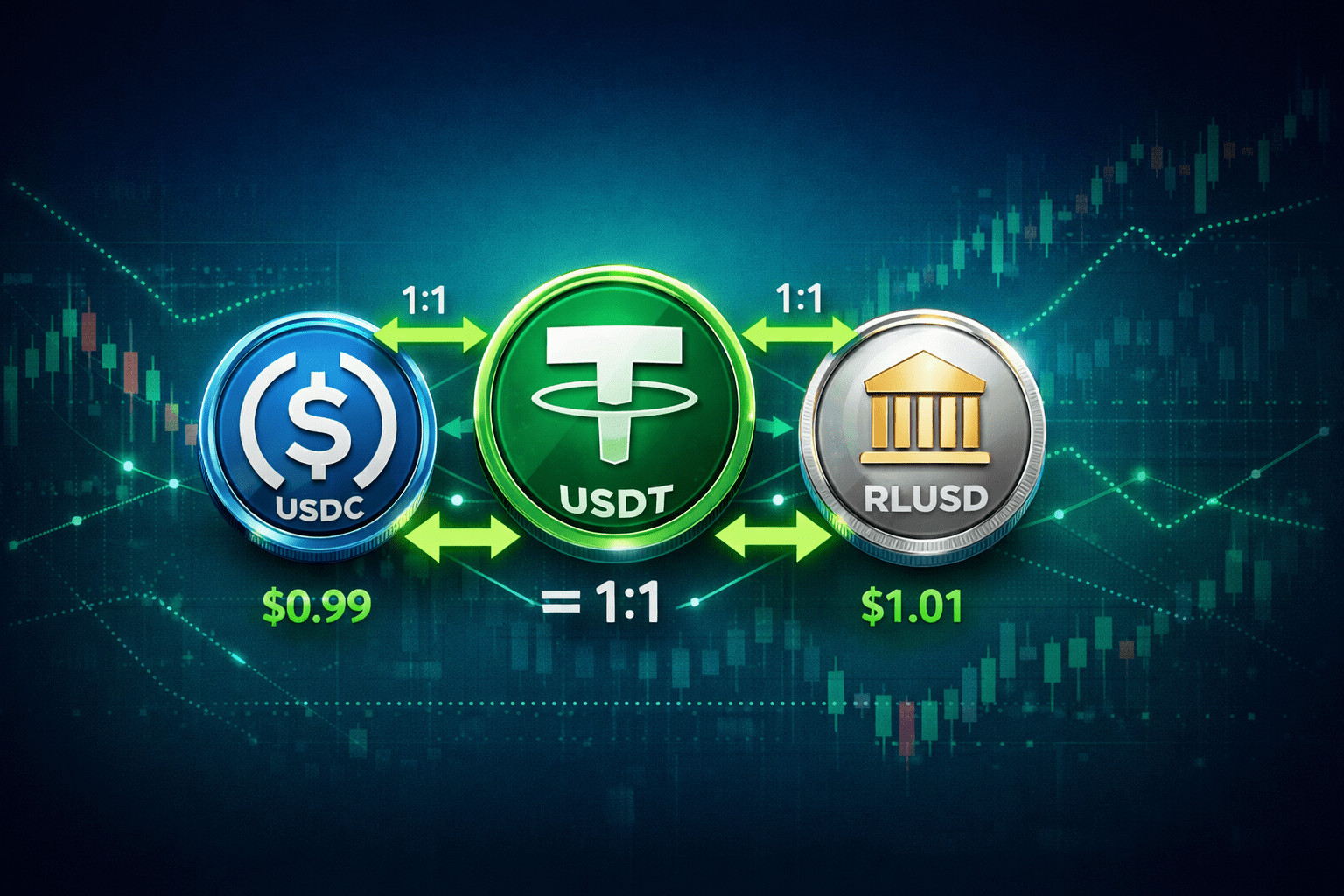
Rhino.fi just launched a product to target stablecoin spreads with 1:1 conversions — announced in the last 13 hours. This is a practical tool for capturing arbitrage opportunities in the stablecoin space, where tiny price differences across platforms can add up when done at scale.
What Actually Happened Rhino.fi built a system that lets users swap stablecoins 1:1 (no slippage or fees beyond gas) while exploiting spreads — the small differences in pricing between the same stablecoin on different exchanges or chains. For example, USDC might trade at $0.999 on one DEX and $1.001 on another; the product automates spotting and capturing that gap without users having to manually bridge or trade.
It’s aimed at traders and liquidity providers, but it ties directly into RWA stablecoins (like RLUSD, USYC, or others backed by real assets). The RWA market is over $25B (excluding stablecoins), and stablecoins are the backbone — this improves their liquidity and efficiency.
The tool works by routing through multiple venues to lock in the spread while keeping the swap 1:1 for the user. It’s not about massive gains on each trade — it’s about consistent small edges that compound over volume. Rhino.fi is positioning it as a way to make stablecoin trading more profitable for those who move large amounts, but the underlying mechanism benefits the entire ecosystem by tightening spreads overall.
Why This Actually Matters Nah, this isn’t flashy. It’s infrastructure. Stablecoin spreads exist because of fragmentation — different chains (Ethereum vs. Solana vs. L2s), different exchanges (centralized vs. DEXs), different issuers, and varying liquidity pools create small inefficiencies. Rhino.fi’s tool captures those without the usual costs or risks of manual arbitrage (slippage, high fees, timing errors, or bridge delays).
For RWAs specifically, better stablecoin liquidity means smoother on-ramps and off-ramps for tokenized treasuries, credit, or deposits. If stablecoins trade tighter and faster, users can move funds into RWAs more efficiently, reducing drag on yields. Stablecoin trading is the “cash layer” for the entire ecosystem — when it’s more efficient, everything else benefits: lower costs to enter treasury positions, easier rebalancing in credit pools, and more reliable pricing for tokenized assets.
I think it’s a smart move. The space needs tools that make stablecoins work better as the bridge to RWAs — less friction, more flow, and more reliable pricing. When stablecoins behave more like perfect cash (1:1, instant, low-cost), tokenized real-world income becomes more accessible and practical for regular users.
How It Could Affect Retail Directly? It’s trader-focused, but retail benefits indirectly. Tighter spreads mean cheaper swaps when entering or exiting RWA positions. More efficient stablecoin trading increases overall liquidity in the ecosystem, which helps tokenized assets perform better (lower slippage when buying treasuries or credit tokens, more stable pegs on RWA-backed stablecoins).
Retail users get the same ecosystem strength: better pricing on stablecoins used in DeFi pools, more reliable on-ramps for RWAs, and a more mature stablecoin market that supports tokenized real-world income. If you’re holding RLUSD or USDC to buy tokenized treasuries, this kind of tool indirectly makes your experience smoother and cheaper over time.
As more volume flows through products like this, spreads narrow naturally — everyone wins, even if you’re not actively arbitraging.
Practical Steps to Watch or Position You don’t need to be a high-volume trader to benefit. Here’s what I’d do right now:
- Wallet check — Make sure your setup supports Rhino.fi chains (likely Ethereum or L2s — MetaMask or similar). Enable notifications for gas price alerts so you don’t get caught with high fees.
- Track the news — Follow Rhino.fi announcements, CoinDesk, The Block for rollout details, volume stats, and any user feedback.
- Explore similar tools — Look at existing arbitrage bots or DEX aggregators (1inch, Paraswap, CowSwap) to see how spreads work today — get a feel for the concept without committing capital.
- Test small — If spreads interest you, try low-volume swaps on Rhino.fi or other platforms to see the savings — start with $50–$100 to understand gas, execution speed, and how often real gaps appear.
- Monitor rwa.xyz — It’s the best dashboard for seeing stablecoin TVL, spreads across issuers, and how liquidity is evolving in RWA-backed stablecoins. Bookmark it and check weekly.
Start small — arbitrage is low-risk/low-reward, but gas and timing can eat profits if you’re not careful. Focus on learning the mechanics before scaling.
A Few Risks to Keep in Mind Spreads can disappear fast — opportunities are fleeting, especially as more tools compete. Gas fees can wipe out small gains, particularly on mainnet. Smart contract risks exist on any platform — even well-audited ones aren’t immune. And stablecoins, even RWA-backed, can deviate slightly during extreme market stress — always check pegs before large swaps. Never chase tiny edges if it means over-leveraging or ignoring fees.
Bottom Line Rhino.fi’s stablecoin spread product with 1:1 conversions is a practical tool for improving liquidity in the space. It makes stablecoins work better as the bridge to RWAs, and that’s good for everyone. I’m watching this closely — it’s the kind of infrastructure that builds the ecosystem quietly but effectively.
Subscribe to RWA News Network so you get the next updates.
What do you think — does capturing stablecoin spreads sound useful to you, or are you sticking to holding for RWA yields?






Market Growth & Performance
Tokenized RWA Market Reaches $23.6 Billion with 66% Growth in 2026
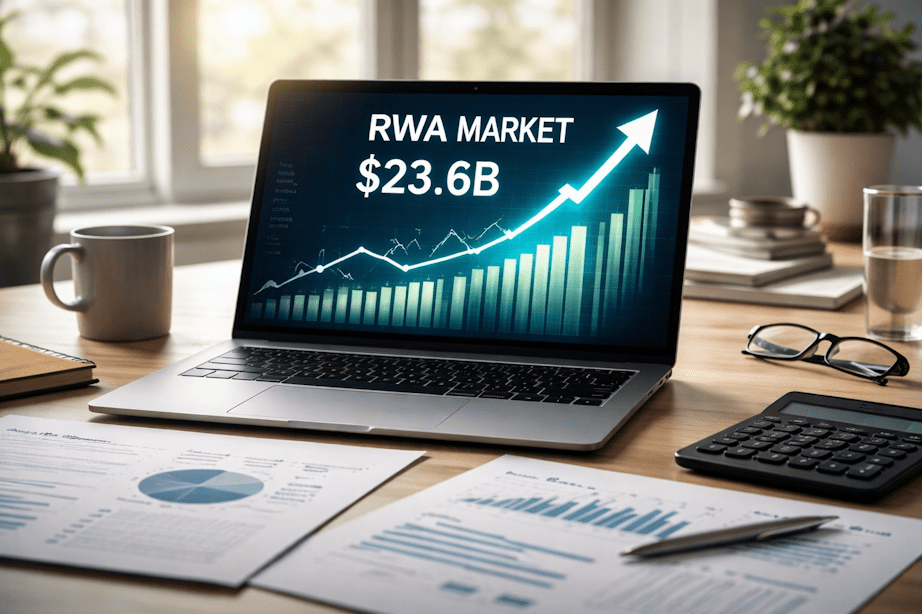
The tokenized real world assets (RWA) market has expanded significantly in 2026, reaching approximately $23.6 billion according to data from DeFiLlama and related analytics platforms. This represents roughly 66% growth year-to-date, highlighting continued institutional interest and the expanding role of tokenization in bridging traditional finance with blockchain technology.
Overview of the Growth Tokenized RWAs, which include assets such as U.S. Treasuries, private credit, gold, and equities brought on-chain, have shown steady expansion throughout the year. The increase reflects broader adoption by asset managers, custodians, and platforms seeking to improve liquidity, enable fractional ownership, and provide 24/7 access to traditionally illiquid or restricted assets.
Key categories driving the growth include tokenized U.S. Treasuries, which continue to dominate as the largest segment due to their yield potential and relative stability. Other notable contributors are tokenized funds, gold-backed assets, and emerging tokenized equity products. The overall market has benefited from improved infrastructure, including better custody solutions and regulatory progress in several jurisdictions.
This growth builds on momentum from prior years, as more traditional financial institutions explore tokenization to modernize operations and reach new investor bases. The $23.6 billion figure marks a meaningful milestone, demonstrating that RWAs are moving beyond experimental pilots toward more established on-chain financial products.
Key Drivers Behind the Expansion Several factors have supported the 66% increase:
- Institutional participation — Major players have launched or expanded tokenized products, bringing credibility and larger capital inflows.
- Yield opportunities — Tokenized treasuries and credit products offer attractive yields in a decentralized environment, appealing to both retail and institutional users.
- Technological improvements — Advances in token standards, such as ERC-4626, have made it easier to issue and manage compliant tokenized assets.
- Regulatory tailwinds — Progress toward clearer frameworks in key markets has reduced uncertainty and encouraged more issuers to enter the space.
- Liquidity enhancements — Growing trading venues and integration with DeFi protocols have improved price discovery and capital efficiency.
These elements have combined to create a more robust ecosystem, with tokenized assets increasingly viewed as a practical complement to traditional portfolios.
Category Breakdown and Performance Tokenized U.S. Treasuries remain the cornerstone of the RWA market, providing a stable yield base and serving as collateral in various on-chain strategies. Tokenized credit products have also gained traction, offering exposure to private markets with greater transparency and accessibility.
Tokenized gold and other commodities have contributed to diversification, while tokenized equities and funds are showing early but promising growth. The expansion across multiple categories indicates healthy development rather than reliance on a single asset type.
Overall market data shows not only higher total value but also an increase in the number of asset holders, suggesting broader participation beyond early adopters.
Implications for the RWA Ecosystem The 66% growth strengthens the case for RWAs as a maturing sector. Higher market capitalization improves liquidity across platforms, reduces spreads, and makes it more attractive for new participants to enter. It also enhances composability in DeFi, where tokenized assets can serve as collateral or yield-generating components.
For traditional finance, the expansion signals that tokenization is becoming a viable tool for modernizing operations. Banks, asset managers, and exchanges are increasingly exploring how to integrate or compete with on-chain alternatives.
Retail investors benefit from fractional ownership and easier access to assets that were previously out of reach. The growth also supports innovation in areas such as real-time settlement and programmable finance.
Practical Considerations for Participants The latest market figures suggest several steps for those interested in RWAs:
- Review current exposure — Assess how tokenized assets fit within a diversified portfolio, balancing yield potential with risk.
- Focus on established categories — Tokenized treasuries and credit offer relatively lower volatility compared to newer segments.
- Monitor key metrics — Track TVL, holder growth, and category-specific performance using platforms like rwa.xyz and DeFiLlama.
- Evaluate platforms — Consider custody, compliance, and liquidity when selecting where to engage with tokenized products.
- Stay informed on developments — Regulatory updates and new product launches can influence market dynamics and opportunities.
These considerations help participants engage thoughtfully as the sector continues to scale.
Risks and Limitations While growth has been impressive, RWAs still carry risks. Market volatility can affect tokenized asset values, particularly in less liquid categories. Custody and issuer risks remain important factors, as does the evolving regulatory landscape. Investors should conduct thorough due diligence and avoid over-concentration in any single product or issuer.
Rapid expansion can also lead to periods of moderation or correction as the market matures.
Outlook The tokenized RWA market’s rise to $23.6 billion with 66% growth in 2026 demonstrates meaningful momentum. As infrastructure improves and more institutions participate, the sector appears well-positioned for further development. Continued focus on transparency, compliance, and real utility will be key to sustaining long-term expansion.
RWA News Network will continue tracking market data, growth trends, and key developments in tokenized real world assets.
Subscribe to RWA News Network for ongoing updates on RWA market performance, institutional activity, and new tokenized products.
Corporate Treasury & Tokenized Payments
Mitsubishi Corporation Adopts JPMorgan’s Kinexys Blockchain for Global Payments – A Major Step for Tokenized Corporate Treasury in 2026
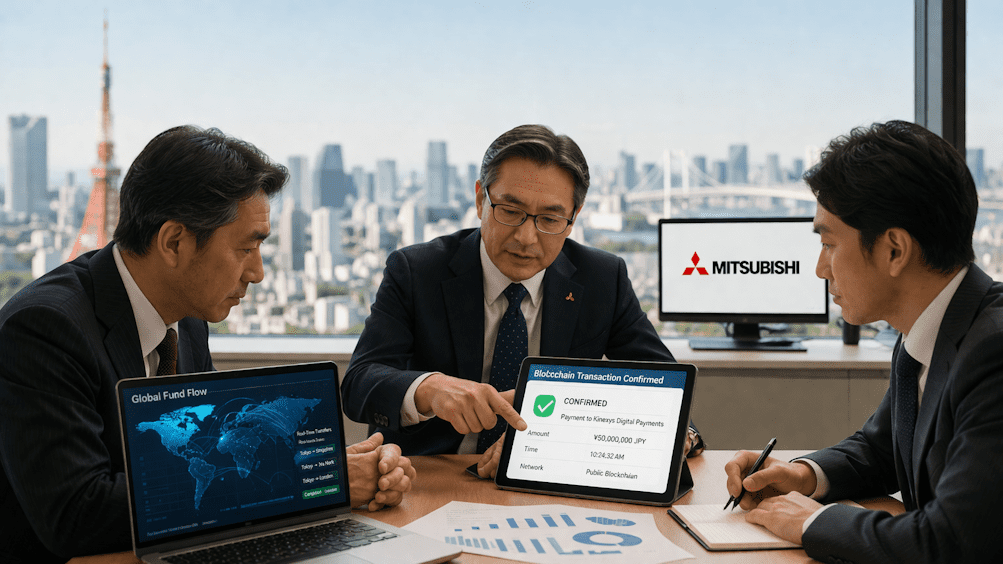
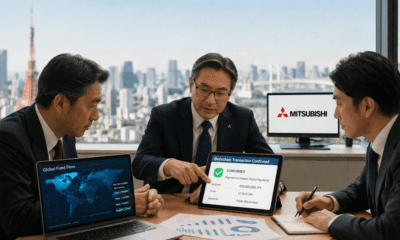
When one of the world’s largest trading companies decides to move its global money flows onto a blockchain platform, it’s worth paying attention. On March 30, 2026, Mitsubishi Corporation quietly made exactly that move. The Japanese conglomerate, known for everything from energy trading to heavy industry and consumer goods, is adopting JPMorgan Chase’s Kinexys Digital Payments system for faster, round-the-clock fund transfers across its international operations.
This isn’t a small pilot or a press-release experiment. Mitsubishi plans to begin full utilization as early as fiscal 2026, making it the first Japanese company to integrate the Kinexys network at this scale. For anyone following the real-world asset (RWA) space, the news carries extra weight. While tokenized treasuries and credit have dominated headlines, corporate treasury operations represent the next frontier where blockchain infrastructure can deliver immediate, practical value.
Kinexys, formerly known as Onyx and built around JPMorgan’s long-running JPM Coin project, has evolved into a full-featured blockchain-based payment rail. It allows near-instant, 24/7 multicurrency transfers between accounts, reduces reliance on traditional correspondent banking networks, and operates with the security and compliance standards that large corporations demand. Mitsubishi’s decision to use it signals that even the most traditional global businesses are ready to move beyond pilots and test real operational change.
The timing makes sense. Multinationals like Mitsubishi manage complex cash flows across dozens of countries, currencies, and time zones. Traditional wire transfers can take days, involve multiple intermediaries, and incur high fees. Kinexys promises settlement in minutes, 24 hours a day, with far greater transparency and lower costs. For a company that moves billions in goods and services worldwide every year, those efficiencies add up quickly.
JPMorgan has been steadily expanding Kinexys beyond its own balance sheet. The platform already handles billions in daily transaction volume for institutional clients, and the bank has publicly stated ambitions to scale it further. Mitsubishi’s adoption is the latest in a string of high-profile corporate integrations, following similar moves by companies like BMW, Siemens, and FedEx. What sets this one apart is Mitsubishi’s status as the first major Japanese corporation to commit at this level, potentially opening the door for more Asian multinationals to follow.
From an RWA perspective, this development is more than just a payments story. Tokenized payment rails like Kinexys are the plumbing that makes the entire real-world asset ecosystem work more smoothly. When corporate treasuries can move money instantly on-chain, it reduces friction for settling tokenized treasuries, credit products, and other RWAs. It also creates new opportunities for programmable money — automated payments tied to smart contracts, real-time reconciliation, and better liquidity management across tokenized assets.
JPMorgan itself has been clear about this direction. The bank has expanded Kinexys to support tokenized deposits, cross-chain settlement experiments with partners like Ondo Finance and Chainlink, and even Delivery-versus-Payment (DvP) transactions for tokenized securities. Mitsubishi’s move fits into that larger vision: building infrastructure that connects traditional corporate finance with on-chain rails.
For the RWA market, which now sits comfortably above $26 billion excluding stablecoins, these kinds of corporate adoptions are important signals. Much of the current focus remains on yield-bearing products like tokenized U.S. Treasuries and private credit. But the real growth catalyst may come from the back-office side — treasury operations, cross-border payments, and supply-chain finance — where blockchain can deliver measurable efficiency gains without requiring a complete overhaul of existing business models.
Mitsubishi’s global footprint makes the announcement particularly interesting. As a sogo shosha (general trading company), it operates in energy, metals, machinery, chemicals, and food across more than 90 countries. Coordinating cash flows in that environment is complex. Using Kinexys could streamline everything from supplier payments to subsidiary funding, potentially reducing settlement times from days to minutes and cutting costs along the way.
Of course, this isn’t happening in isolation. JPMorgan has been expanding Kinexys internationally, including in the Asia-Pacific region, and has expressed interest in deeper penetration among Japanese financial institutions and businesses. The bank’s broader digital assets strategy includes tokenized deposits, programmable payments, and integration with public blockchains like Base. Mitsubishi’s adoption could serve as a proof point that encourages other Japanese firms to explore similar solutions.
Regulatory and compliance considerations are also key here. Kinexys operates with the full backing of a regulated U.S. bank, which gives corporations the comfort level they need to move real operational money onto blockchain infrastructure. For companies like Mitsubishi, maintaining strict compliance while gaining speed and transparency is the ideal combination.
Looking ahead, this kind of infrastructure adoption could accelerate the broader tokenization trend. As more corporations integrate blockchain-based payment rails, the case for tokenizing other parts of their balance sheets — from invoices to supply-chain finance to even certain real assets — becomes stronger. It’s a step toward what some call the “internet of money,” where value moves as seamlessly as information does today.
For retail and institutional investors in the RWA space, the implications are indirect but meaningful. More efficient corporate treasury operations can lead to better liquidity in tokenized products, more reliable settlement for RWA trades, and ultimately greater institutional participation. When companies like Mitsubishi demonstrate that blockchain payments work at scale in real-world operations, it helps normalize the technology for everyone else.
Challenges remain, of course. Scaling blockchain payments to handle the full complexity of global corporate finance isn’t trivial. Interoperability between different platforms, regulatory harmonization across borders, and the need for robust security and governance will all play a role in how quickly this evolves. But the direction is clear: major corporations are moving from experimentation to implementation.
Mitsubishi’s adoption of Kinexys is a concrete example of that shift. It’s not flashy headline-grabbing tokenization of a trophy asset — it’s the kind of practical, back-office innovation that often drives lasting change in finance. As more companies follow suit, the tokenized payment rails that support the entire RWA ecosystem will become stronger, faster, and more widely used.
RWA News Network will continue tracking these developments in corporate treasury, tokenized payments, and their impact on the broader real-world asset market.
Subscribe for ongoing coverage of institutional RWA adoption, payment infrastructure innovations, and market updates.
Real World Assets
Tokenized Real Estate Is Quietly Gaining Ground in 2026 as Institutions Line Up
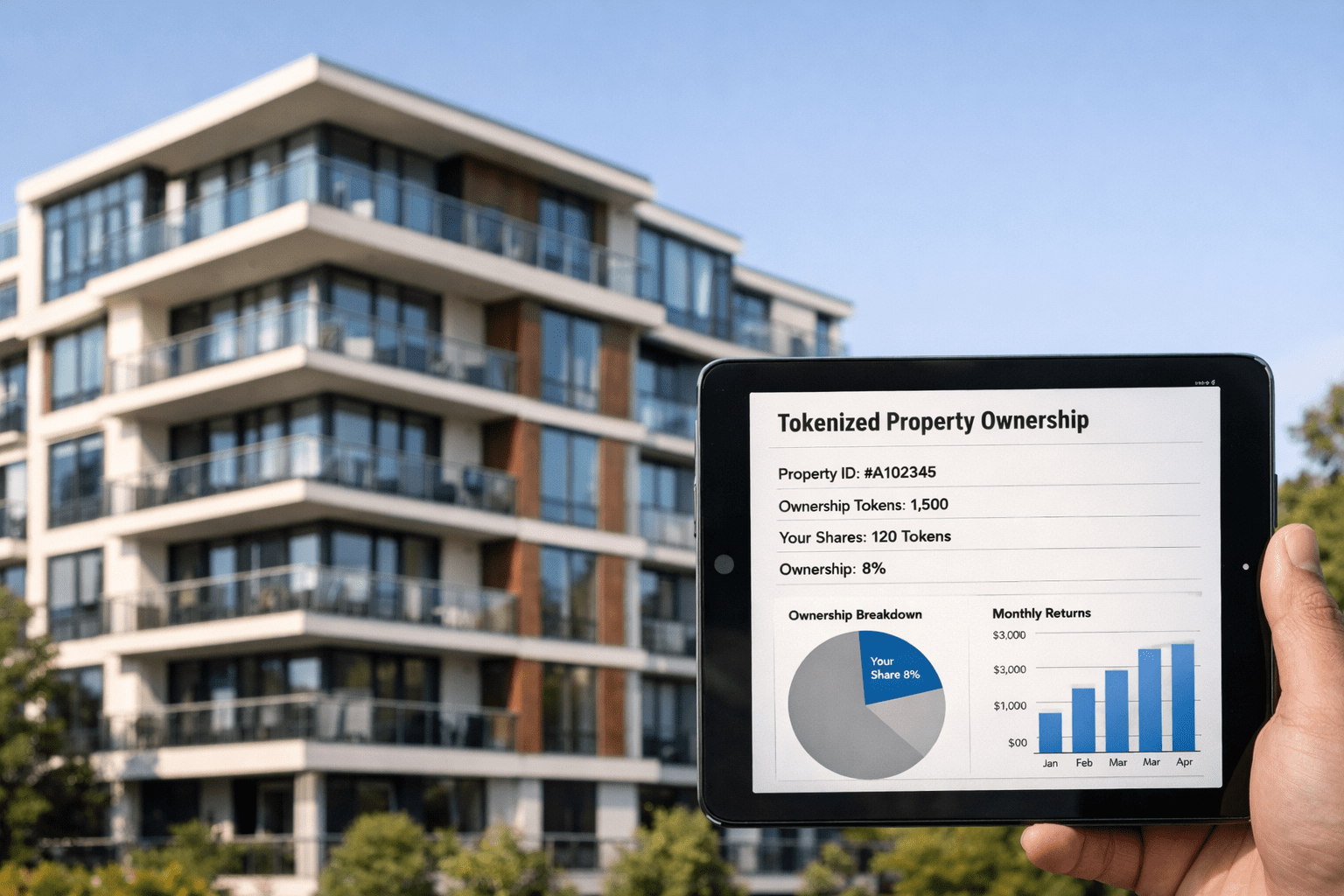
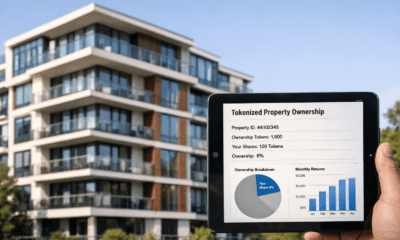
South Korea’s financial giants are quietly but steadily moving into tokenized assets, and Hanwha Investment & Securities is stepping up its efforts in a noticeable way. In the past day, reports highlighted the firm’s accelerated push into real-world asset tokenization, adding to a growing wave of institutional activity across Asia.
Hanwha, one of the country’s major securities houses, has been expanding its exploration of tokenizing traditional financial products. The move aligns with broader interest from South Korean institutions that see tokenization as a way to improve efficiency, reach global investors, and unlock liquidity in otherwise illiquid assets.
This development comes at a time when the overall RWA market continues to climb past $26 billion (excluding stablecoins), with tokenized treasuries and credit still leading but new categories gaining ground. Asia has been watching the rapid growth in the U.S. and Europe closely, and firms like Hanwha appear determined not to fall behind.
What makes Hanwha’s activity noteworthy is the practical focus. Rather than broad announcements, the emphasis seems to be on building the infrastructure and partnerships needed to bring real assets — such as bonds, funds, or other financial instruments — onto the blockchain in compliant, investor-friendly ways.
For the wider RWA ecosystem, increased participation from major Asian institutions is important. It diversifies the market beyond U.S. and European players and brings fresh capital and regulatory perspectives. South Korea has been refining its digital asset rules, and clearer frameworks could encourage even faster adoption in the coming months.
Retail and institutional investors alike stand to benefit if tokenization gains traction in the region. Fractional ownership, faster settlement, and 24/7 access could open new opportunities in markets that have traditionally been harder to enter. At the same time, success will depend on strong custody solutions, transparent reporting, and continued regulatory coordination.
The broader trend is clear: tokenization is moving from experimental pilots to something institutions are actively integrating into their strategies. Hanwha’s accelerated push is one more signal that Asia is becoming an increasingly important part of the RWA story.
As these efforts mature, the tokenized asset market could see meaningful contributions from new geographies and asset classes, further expanding the options available to investors worldwide.
RWA News Network will continue following institutional tokenization developments across Asia and globally.
Subscribe for the latest on RWA market movements, institutional partnerships, and emerging trends in tokenized assets.
What do you think about the growing role of Asian institutions in the RWA space — does it accelerate global adoption, or bring new regulatory challenges? Share your thoughts in the comments.

Integra Layer: Dedicated Layer 1 Blockchain Built for Real Estate Tokenization with $12B+ Consortium – RWA News April 2026

Lise and Kaiko Partner to Deliver Institutional-Grade Market Data for Tokenized Securities – RWA News April 2026

Tokenized RWA Market Reaches $23.6 Billion with 66% Growth in 2026

Mitsubishi Corporation Adopts JPMorgan’s Kinexys Blockchain for Global Payments – A Major Step for Tokenized Corporate Treasury in 2026

Tokenized Real Estate Is Quietly Gaining Ground in 2026 as Institutions Line Up

Ripple Keeps Tightening RLUSD Supply with Fresh Burns – What It Means for Stablecoin Stability in 2026

RWA Projections 2026–2030: From $26 Billion Today to Multi-Trillion Scale

Tokenized US Treasuries Reach $11B–$12B Record – Yields & Top Funds

Tokenized Real World Assets Surge Past $27 Billion in March 2026 – The Quiet Revolution Reshaping Global Finance

JPMorgan Now Accepting Bitcoin and Ethereum as Institutional Collateral – RWA News March 2026

Robinhood CEO Vlad Tenev Urges CLARITY Act for Stablecoin Yields – RWA Boost in March 2026

BlackRock CEO Larry Fink and Coinbase CEO Brian Armstrong Both Bullish on Tokenization
-
 Market Projections & Outlook7 months ago
RWA Projections 2026–2030: From $26 Billion Today to Multi-Trillion Scale
-
Real World Assets7 months ago
Tokenized US Treasuries Reach $11B–$12B Record – Yields & Top Funds
-
Market Data & Insights7 months ago
Tokenized Real World Assets Surge Past $27 Billion in March 2026 – The Quiet Revolution Reshaping Global Finance
-
Institutional & Collateral Updates7 months ago
JPMorgan Now Accepting Bitcoin and Ethereum as Institutional Collateral – RWA News March 2026
-
Real World Assets7 months ago
Robinhood CEO Vlad Tenev Urges CLARITY Act for Stablecoin Yields – RWA Boost in March 2026
-
Institutional Bullishness & Tokenization Outlook7 months ago
BlackRock CEO Larry Fink and Coinbase CEO Brian Armstrong Both Bullish on Tokenization
-
Real World Assets7 months ago
Fidelity Calls on SEC to Expand Broker-Dealer Crypto Capabilities via Alternative Trading Systems – RWA News
-
Institutional Adoption & Tokenized Securities7 months ago
NYSE Partners with Securitize to Build 24/7 Tokenized Securities Platform – RWA News March 2026