Institutional Data & Market Infrastructure
Post-Quantum Money Just Landed on Solana: Quantus QTC Now Trading Live on Raydium
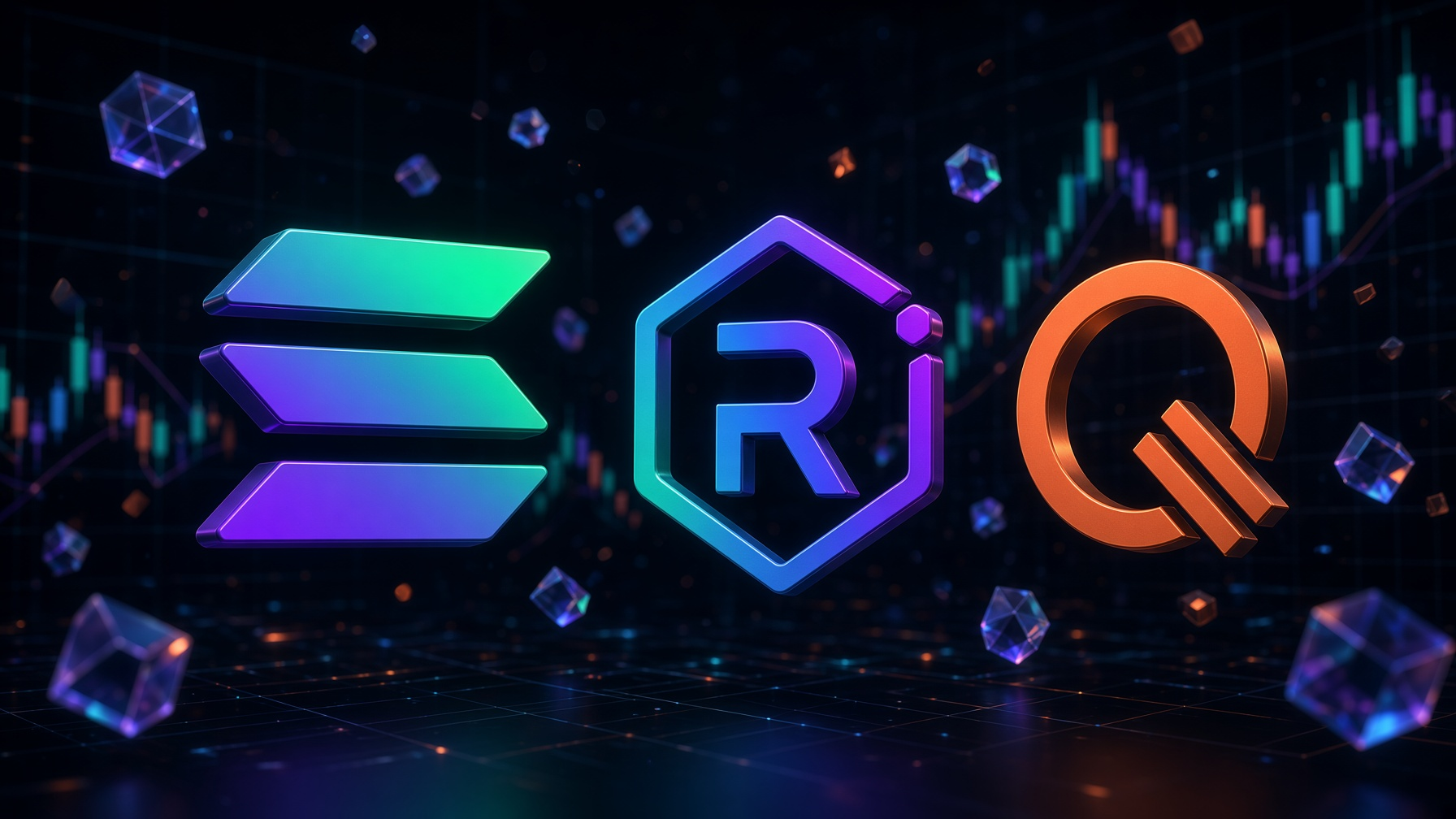
Raydium announced on November 12 that internet money secured with post-quantum cryptography is now live on Solana and trading on its platform. The post points to Quantus Network’s native coin, QTC, which the project says is available on Solana through Raydium, powered by NEAR Intents.
Quantus is a standalone proof-of-work Layer 1 that launched its mainnet on September 9, 2026. Every transaction on the network is signed with ML-DSA, the lattice-based digital signature scheme that NIST standardized as FIPS 204 in 2024. The project states that it has used ML-DSA since genesis and that there is no fallback to elliptic-curve signatures. It is designed as digital money rather than a general smart-contract platform, with a hard supply cap of 21 million QTC. Of that total, 73 percent is issued through mining and 27 percent was created at genesis for investors, the team, and the company under a vesting schedule.
Because Quantus does not support smart contracts, its native QTC exists only on its own chain. Access on other networks, including Solana, runs through cross-chain infrastructure. NEAR Intents has been the primary route for trading QTC outside the Quantus network since early October. The Raydium listing expands that access so holders of Solana assets can trade QTC on one of the chain’s main decentralized exchanges without leaving the Solana environment.
Internet money secured with post-quantum cryptography is live on Solana.
Now trading on Raydium.
— Raydium (@Raydium) November 12, 2026
The Quantus account stated that the network has more than 33,400 accounts. Trading activity for QTC has previously occurred through NEAR Intents and a small number of other venues. The Raydium integration adds a high-liquidity Solana venue to those options.
Post-quantum cryptography addresses the long-term risk that sufficiently large quantum computers could break the elliptic-curve signatures used by most existing blockchains. ML-DSA is designed to resist known quantum attacks by relying on lattice problems rather than the discrete-logarithm problems that underpin ECDSA and related schemes. Quantus is one of the few networks that adopted the standard at launch rather than planning a later migration.
The availability of QTC on Raydium does not change the underlying asset or the security properties of the Quantus chain itself. It does expand the set of users who can acquire and trade the coin using assets they already hold on Solana. For Solana traders, the listing places a post-quantum, proof-of-work money asset alongside the tokenized stocks, stablecoins, and other tokens already active on the network.






Institutional Data & Market Infrastructure
Lise and Kaiko Partner to Deliver Institutional-Grade Market Data for Tokenized Securities – RWA News April 2026
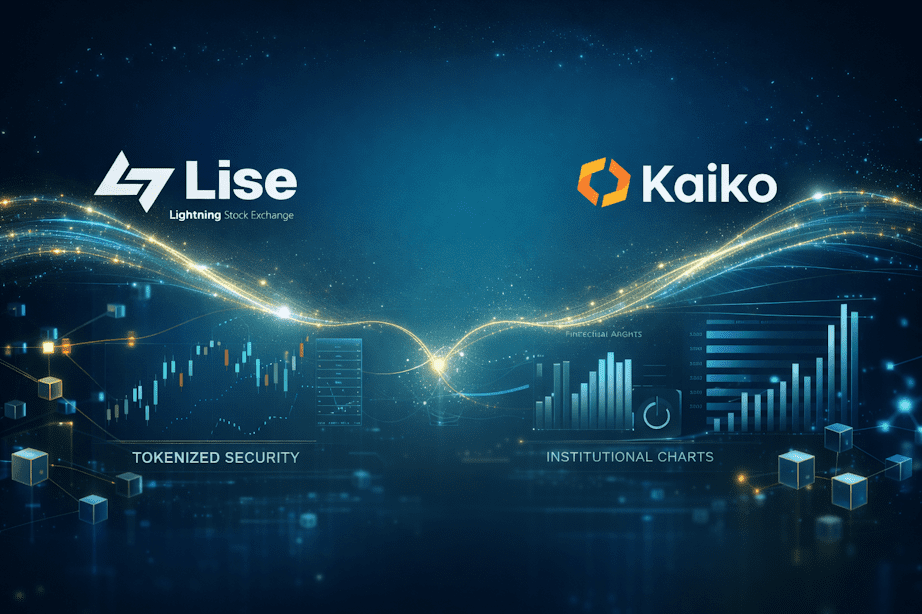
Lise and Kaiko have announced a partnership to provide institutional-grade market data for tokenized securities. The collaboration, reported within the last 24 hours, aims to bridge the gap between traditional finance data standards and the emerging tokenized real world assets (RWA) market.
Details of the Partnership Lise, a platform focused on tokenized asset infrastructure, is teaming up with Kaiko, a leading provider of crypto market data. The joint solution will deliver high-quality, reliable data feeds including pricing, volume, order book depth, and historical analytics specifically tailored for tokenized securities and RWAs.
This data will support institutional participants who require professional-grade information for trading, risk management, and portfolio construction in the tokenized space. The partnership addresses a key pain point: while RWAs are growing rapidly, many lack the robust market data infrastructure that traditional securities enjoy.
The RWA market (excluding stablecoins) has climbed significantly in 2026, with tokenized treasuries and other assets driving much of the growth. Accurate, institutional-grade data is essential for attracting larger capital flows and enabling sophisticated trading strategies.
Why This Partnership Matters Institutional investors and asset managers need trustworthy data before allocating substantial capital to new asset classes. By combining Lise’s tokenized asset expertise with Kaiko’s data infrastructure, the partnership creates a credible data layer for tokenized securities.
This development supports greater transparency and price discovery in the RWA sector. Better data reduces information asymmetry, helps institutions model risk accurately, and makes it easier for platforms to list and trade tokenized products.
Implications for Tokenized Real World Assets Improved market data will accelerate RWA adoption. Institutions can more confidently integrate tokenized treasuries, credit, equity, and other assets into portfolios. Retail platforms and DeFi protocols can also benefit from higher-quality feeds for better user experiences and risk controls.
The partnership contributes to the professionalization of the RWA market. As data infrastructure matures, the sector moves closer to the standards expected in traditional finance, which could unlock trillions in potential value over time.
Practical Considerations for Participants The new data offering has several implications:
- Better decision-making — Institutions and traders gain access to reliable pricing and volume data for tokenized assets.
- Risk management — Enhanced analytics help model volatility and liquidity in RWA products.
- Platform integration — Expect more exchanges and protocols to incorporate the data feeds.
- Monitoring — Watch for updates on available datasets and supported tokenized securities.
- Adoption signals — Institutional-grade data often precedes larger capital inflows into the sector.
These tools help participants navigate the evolving RWA landscape with greater confidence.
Risks and Limitations Data partnerships do not eliminate market risks or smart contract vulnerabilities. Coverage may initially focus on major tokenized products, with smaller assets added later. Institutions should verify data accuracy and combine multiple sources for robust analysis.
Outlook The Lise-Kaiko partnership represents an important step in building professional infrastructure for tokenized securities. As high-quality data becomes available, the RWA market gains the tools needed for sustained institutional growth and mainstream integration.
RWA News Network will continue covering data infrastructure, partnerships, and their role in the tokenized real world assets ecosystem.

Solana Breakpoint 2026 Is About to Start in London – Here’s Who Has the Most Hype and What They’re Shipping

Bitcoin Crashes Below $68K as Inflation, Fed Hike Bets, ETF Outflows and Nvidia Shock Hit Crypto Hard

Litecoin Just Took a Major Step Toward Smart Contracts – Mainnet Is Getting Closer

RWA Projections 2026–2030: From $26 Billion Today to Multi-Trillion Scale

Tokenized US Treasuries Reach $11B–$12B Record – Yields & Top Funds

Tokenized Real World Assets Surge Past $27 Billion in March 2026 – The Quiet Revolution Reshaping Global Finance
-
 Market Projections & Outlook8 months ago
RWA Projections 2026–2030: From $26 Billion Today to Multi-Trillion Scale
-
Real World Assets8 months ago
Tokenized US Treasuries Reach $11B–$12B Record – Yields & Top Funds
-
Market Data & Insights8 months ago
Tokenized Real World Assets Surge Past $27 Billion in March 2026 – The Quiet Revolution Reshaping Global Finance
-
Institutional & Collateral Updates8 months ago
JPMorgan Now Accepting Bitcoin and Ethereum as Institutional Collateral – RWA News March 2026
-
Real World Assets8 months ago
Robinhood CEO Vlad Tenev Urges CLARITY Act for Stablecoin Yields – RWA Boost in March 2026
-
Litecoin2 days ago
Litecoin Just Took a Major Step Toward Smart Contracts – Mainnet Is Getting Closer
-
NFTs5 days ago
ITIA Opens Whitelist for Free 1,111-Piece Genesis Collection on Ethereum as Applications Surpass 25,000
-
Market Growth & Performance6 days ago
Robinhood Chain’s Stock Tokens Now Sit in Nearly 1.7 Million Wallets